
Your magnesium supplementation routine might never work if the real problem is stress management, not the pill.
That question came from a reader named Zora Hepburn, who sent me an actual email, not just a comment, after a piece I wrote about productivity and sleep. She works in nonprofit management, has fewer resources to throw at burnout than a marketing director does, and wanted the short version: skip the philosophy, just tell her the order to fix things in.
Fair ask. Long before professional wellness was a phrase anyone used in my industry, I treated a four-hour night as proof I was tougher than the person next to me — right up until I fell asleep mid-sentence during a client pitch and had to watch my own boss clear his throat to wake me up. Everything below is the order I actually check now, not the order I wish someone had handed me before that happened.
Magnesium Supplementation: What Helped and What Didn't
Magnesium supplementation is where most people start, and where I started too. The form matters — magnesium glycinate is the one I stuck with — though the deeper comparison of forms is a topic for another day. There are Magnesium RDA guidelines published if you want the reference numbers; what mattered more to me was what it actually felt like, which was less of the physical tightness that comes from ten hours in an ergonomic chair, not an on-off switch for sleep itself.

Not everything I tried earned a permanent spot on the nightstand. A magnesium spray I bought on a whim promised the same benefit without swallowing anything, and all it actually did was leave my pillowcase feeling greasy for the better part of a week — a pricey way to learn that delivery method matters as much as the ingredient itself. Nobody warns you about the pillowcase.
Why Your Screens Undo the Melatonin You Already Have
Screens matter more than any pill on this list. Blue light exposure suppresses your body's own melatonin production in the pineal gland, so you can take a supplement at ten and undercut it at eleven just by checking Slack in bed — the mechanism is its own rabbit hole, but the practical upshot is simple enough.
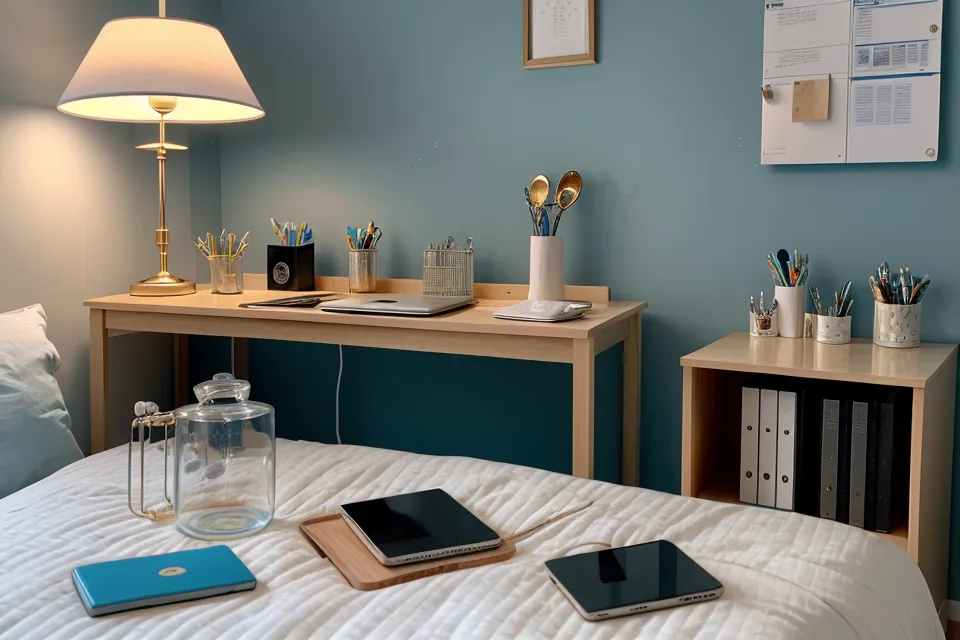
Digital boundaries deserve a full piece of their own, more than I can do justice to here, but the version that actually worked for me was shutting down the pitch and the laptop at least an hour before I wanted to be asleep. It felt precious and a little ridiculous the first few times I tried it. It also worked, which is more than I can say for most things on this list.
The Caffeine Window Nobody Audits
Caffeine is the next thing to audit, and it's the one every high-stress professional underestimates. It sticks around in your system far longer than the clock on your afternoon latte suggests, which is a topic worth its own deep dive rather than a paragraph here. I stopped running the math and just started treating my caffeine intake like a campaign budget — spend it all before noon, and stop pretending the three o'clock cup is a victimless decision.

When the afternoon slump showed up anyway, the fix that actually worked wasn't more coffee — it was taking a power nap instead. Get the timing wrong and you wake up groggier than when you started, which is sleep inertia doing its job, not proof that napping doesn't work. Getting that part right is a skill worth learning on its own before writing off naps entirely.
Stress Management Changes Everything Else
Here is the thing about stress management: it's the piece that made everything else make sense. Cortisol that should be dropping by evening stays elevated when you're under chronic pressure, and that alone can blunt whatever a magnesium or melatonin routine is trying to do underneath it — no supplement out-argues a nervous system that still thinks it's in the client meeting.

An 'urgent' Slack notification at ten thirty can undo an hour of careful preparation in about four seconds, which is exactly what kept happening to me before I changed anything. Adding Yoga Nidra to my evenings was the first thing that actually told my nervous system it was safe to downshift, instead of hoping a capsule would out-argue my own adrenaline. A consistent cue at roughly the same point every night, along with a genuinely boring bedroom environment (temperature, noise, the works), does more of this work than people expect, and both are deep enough subjects to deserve their own piece rather than a paragraph here. If your version of downshifting some nights is a glass of wine at a work happy hour, it's worth knowing that's sedation, not sleep. That's a different thing entirely, even when it feels similar in the moment.
Reading the Signs It's Actually Working
Sleep debt from a brutal launch week doesn't erase itself just because you had one great night afterward. It carries forward, the same way an overdue invoice doesn't vanish because yesterday's numbers were good. Knowing whether any of this is actually working is a separate skill from trying it in the first place. My friend Sasha Moretti — a college friend, now a product manager at a SaaS startup — was the first person who ever sent me a link to a sleep-tracking app, back when I thought that was a strange thing to need. I still don't obsess over the data, but having even a rough sense of your own sleep architecture changes what you pay attention to, which is a deep enough topic for its own piece.
There's a specific Tuesday that told me more than any app could. Nine in the morning, walking the rooftop loop through Salesforce Park for our team's standing all-hands, and it hit me that coffee hadn't crossed my mind once — not from willpower, just because I hadn't needed it yet. The side of the bed I hadn't moved to all night was still cool when I woke up, proof I'd stayed put instead of thrashing across the mattress the way I used to, and that told me more than any single number could have.
So, Do Supplements Actually Matter?
None of this makes supplements useless — it just puts them near the bottom of the list instead of the top. I still keep magnesium glycinate on hand, and during particularly brutal launch weeks I've found using a targeted support like Resurge genuinely helps me stay grounded when the stress is peaking — not as a substitute for fixing the screens, the caffeine, and the stress load first, but as one piece near the end of a much longer list.
I still check my phone before bed some nights. I still work too much, some weeks more than I'd admit to Zora if she asked directly. But I'm not the person falling asleep in front of clients anymore, and if a marketing director who can barely manage her own inbox can get this far, the order above is worth trying before the next bottle — and if sleep problems are serious or ongoing, that conversation belongs with an actual doctor, not a marketing director with opinions.