
The walk from a boardroom to a parking garage is supposed to count as decompression, and somehow never actually resets anything. Half the sleep strategy advice aimed at busy professionals treats a commute like a built-in burnout-prevention tool, some automatic mental reboot between the last Slack notification and your front door. It isn't one. And treating it like one might be the biggest reason your office productivity holds together fine all day while your sleep falls apart the moment your head hits the pillow.
The misconception goes something like this: a stressful day gets processed on the drive home, so by the time you're inside, you're already halfway calm. Fifty-hour workweeks taught me otherwise. A commute is dead time, not therapy, and treating it like the latter is exactly why so many of us end up in bed replaying a four o'clock meeting on a loop, wide awake.
Your Commute Isn't a Reset Button
Stress doesn't clock out just because you did. Whatever spiked during a hard budget review or a client call that ran long stays elevated — cortisol among other things — until something actively tells your body the threat has passed. Sitting in traffic or half-listening to a podcast on the train isn't that signal. It's just a different chair.
None of this is about paying down sleep debt, either — that's a separate, longer problem with its own fixes, and no single evening habit clears it. This is about the narrow gap between finishing work and actually being off duty, and most of us skip that gap entirely, assuming the drive or the walk already covers it.
Sleep Tracking Doesn't Actually Help
I downloaded three different sleep-tracking apps at one point, convinced that if I measured hard enough I'd find the fix. All it did was hand me a new screen to check right before bed — heart rate variability, a sleep score, some vague readiness number — while the actual falling-asleep part got worse, not better. Data isn't a decompression ritual. It's just more inbox.
Sleep-tracking numbers can be genuinely useful — mapping deep sleep and REM cycles down to the minute is its own fascinating rabbit hole — but none of that solves a Tuesday night where your brain won't stop drafting emails. Optimizing is a daytime skill. At eleven at night, it just becomes one more task on a list that's already too long.

The Actual Sleep Strategy: A 15-Minute Office Shutdown
The fix isn't a better tracker or a longer commute. It's fifteen minutes, done at your desk, before you touch your car keys, answer one more Slack ping, or hop on a call with someone three time zones ahead who's just starting their morning. Three five-minute segments, in this order: close the digital loops, reset the physical space, offload whatever's left in your head onto paper. None of it is complicated. All of it gets skipped constantly, because a rough meeting doesn't exactly leave room for a ritual that looks this small.
Close the Digital Loops Before You Leave
There's a name for why one unread message keeps intruding on your evening: the Zeigarnik effect, the tendency for unfinished tasks to stick in memory harder than finished ones do. Five minutes of real triage — not answering everything, just deciding what waits until tomorrow — closes enough of those open loops that your brain stops running the tab in the background.
On nights that run long and the glare turns into its own headache, wearing blue light blocking glasses for late night emails takes some of the edge off, though the triage does more work than the glasses ever will. This isn't about timing your last coffee against some caffeine half-life chart, either. It's about what's still churning in your head hours after the espresso wore off.
Reset the Physical Space, Reset Your Head
Clearing the desk sounds like busy work until you notice how much it actually does. Stray mugs, loose papers, the cold click of the monitor going dark — five minutes of resetting the physical space tells your body the professional shift is over, even if the calendar disagrees. This isn't a nap, so there's no groggy sleep-inertia to shake off before the drive home. You're not sleeping. You're just stopping. My colleague Winifred, who sits two desks over, has started calling this "the ritual" and calls me out, warmly but firmly, whenever I try to skip it for one more email — she's usually right that the email can wait and I can't.

Write It Down So Your Brain Doesn't Have To
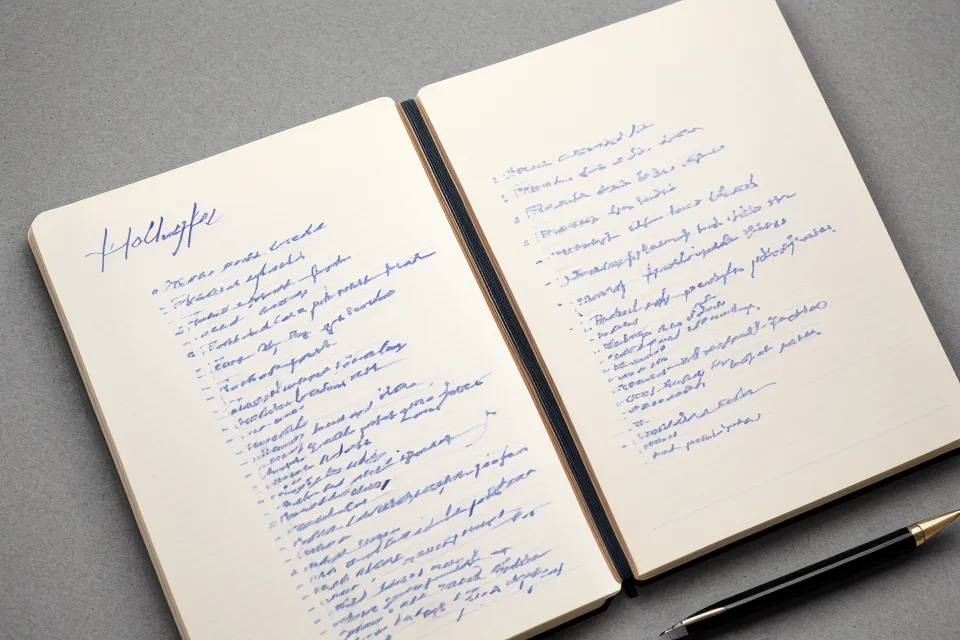
The last five minutes are a physical notebook, no screen, and a short list of tomorrow's three most stressful things. Once the pending budget line or the follow-up nobody's answered yet is on paper, it's out of your working memory, and it stops trying to wake you up at an hour that isn't yours anymore. It's the same logic behind why I stopped bringing my laptop into the bedroom — work stays a physical object you can set down, not a tab that follows you under the blanket.
None of this replaces the rest of a decent setup for sleep — a cool room, blackout curtains, a consistent bedtime that anchors your circadian rhythm instead of drifting by two hours every weekend — it just clears the loudest static before any of that gets a real chance to work.
What Fifteen Minutes Won't Fix
This routine isn't magic, and it doesn't survive every week intact. During the stretch before a big product launch, the shutdown is usually the first thing to go. I'll work straight through until the office empties out, skip all three steps, and pay for it later with the kind of restless, replaying-the-day night that used to be normal for me. That's not a failure of the method. It's what happens when an actual fire needs putting out, and the fifteen minutes is the thing I don't have.
It also won't undo one glass of wine too many at a work happy hour — alcohol and sleep quality don't mix the way people assume, since being knocked out cold isn't the same thing as actually resting. A reader named Belinda emailed me a log of her own version of this routine that was more thorough than most medical charts, tracking exactly which nights the digital triage held and which nights work ran too late for any of it to happen. Her pattern matched mine almost exactly: the shutdown doesn't need to be perfect to work. It just needs to happen before you leave the building, not after.
The rule, if you want one: decompression has to happen in the place where the stress happened, not in the place where you're trying to sleep. Skip the fifteen minutes and the fire tends to follow you home; take them and it mostly doesn't, and your melatonin gets a fair shot at doing its job on schedule instead of fighting a brain that's still drafting tomorrow's agenda. I caught myself on a Tuesday morning all-hands walk around the rooftop garden at Salesforce Park, forty minutes in, noticing I hadn't thought about needing coffee once — no craving, no clock-watching for the next cup. That's not a dramatic before-and-after. It's just what the fifteen minutes actually buys you, on the days you use them.