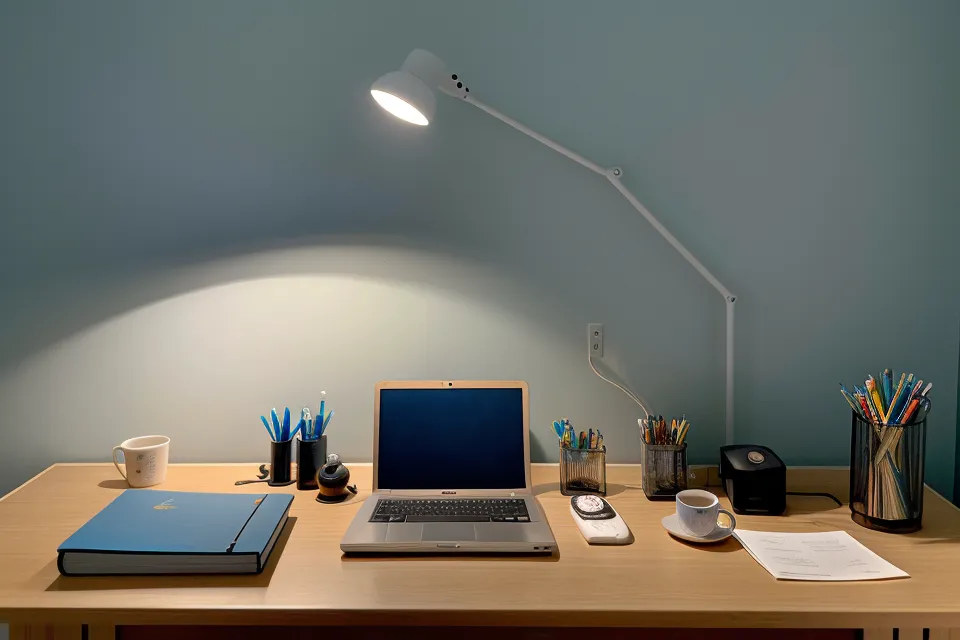
Two Kelvin numbers explain almost everything about why a bedroom fights sleep or helps it: somewhere around 5000, and somewhere around 1800. That gap, roughly the difference between a hospital hallway and a candle, turned out to be the simplest biohacking win I've found for the circadian-rhythm chaos of a job that runs on Slack pings and back-to-back Zooms. Swap the bulb, and the room stops arguing with your body before you touch anything else in your home environment.
Before the swap, most evenings ended the same way: a bench at Salesforce Park rooftop, phone brightness maxed out, answering one more Slack thread before the walk home. Then came an apartment lit like a conference room at nine at night, same color as the panel used to grill a slide deck at ten in the morning, and a brain that flatly refused to downshift.
The Bright-White Bedroom Environment
Melatonin wasn't the only thing on the list. Taken at random doses most nights for about four months, no schedule, no consistency, it did roughly nothing — same as the apps, the teas, and the various supplements that promise to shut your brain off I'd already cycled through. The room itself was the bigger problem: 5000-Kelvin daylight-white light running until the second I hit the pillow, the same color temperature as a kitchen or a whiteboard session, giving my body zero cues that the day was actually over.
A friend who spends most weeknights taking aerial silk classes at a studio in the Mission once told me she comes home completely wired, no matter how tired her arms are, all adrenaline and gym-bright lighting until the last minute. That tracked with what I was noticing in my own bedroom: cool, bright light keeps a body in daytime mode regardless of what the calendar says you should be doing next.
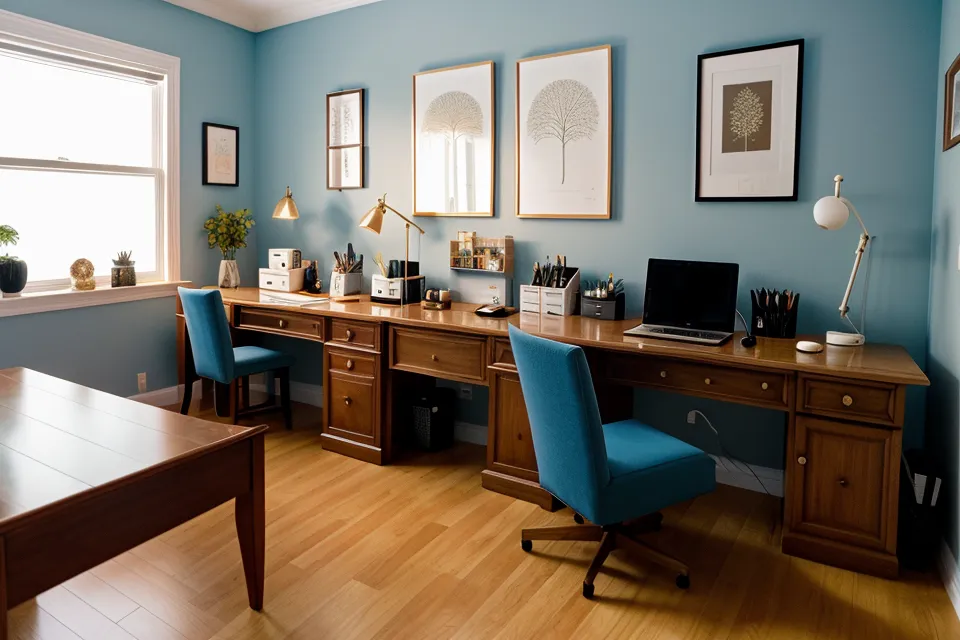
Warm Light Changes the Signal, Not the Willpower
Here is the thing: swapping bulbs doesn't fix willpower, it changes what your eyes are reporting to your brain. Blue-heavy light reads as daytime and keeps the sleep signal switched off; take that particular color out of a room in the evening, and your body gets to make its own call instead of having it overridden every night. That's the entire mechanism, no physics lecture required to make use of it.
Sleep debt doesn't care what caused it, and a bedroom that keeps signaling "still daytime" just adds another entry to a pile that's usually already too full. Bringing stress down before bed works better when the room stops fighting the effort with daylight-strength light — one less variable to juggle after a day that already had plenty.
Does Amber Light Actually Help?
Short answer: yes, but only for the specific job it does. It won't sedate anyone, and it's not a substitute for an actual bedtime. It just removes one obstacle that was working against sleep instead of for it.
There's a real cost to it, though. Color accuracy falls apart almost completely under amber light — a navy blazer and a black one turn into the same garment, and picking matching socks by feel alone before an early flight is basically a coin flip. Small tax for a calmer evening. Still a real one.
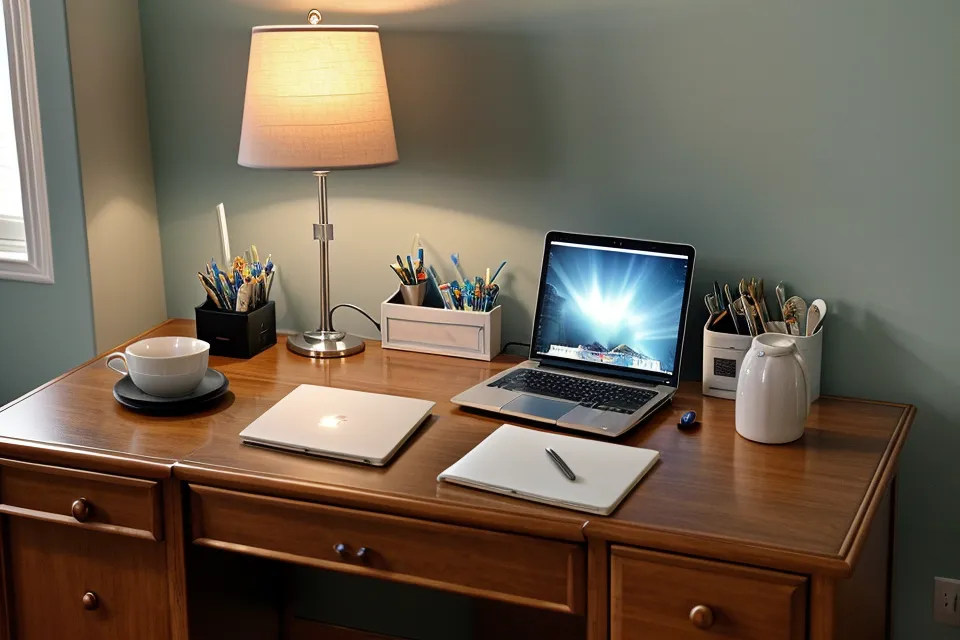
The upside shows up fast, though. The first night the amber lamps replaced the daylight-white ones, the whole room shifted from something closer to a hospital hallway to something closer to a campfire, and the jaw-clenched feeling that usually shows up around a laptop at night eased without much effort. Reading in that light, instead of scrolling under it, turned into the easiest part of the evening.
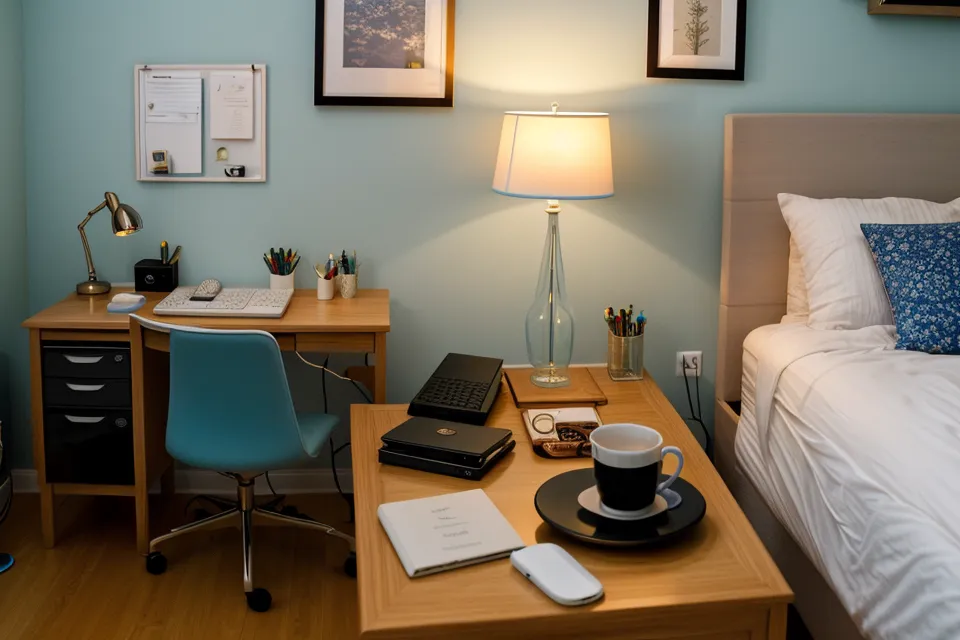
Proof of that showed up on an ordinary Tuesday, three questions into a 9 a.m. all-hands, when I realized coffee hadn't even crossed my mind that morning — small thing, but not a normal one for me. Mornings like that are the actual goal, and if that's what you're chasing too, my strategy for quiet nights before high-stakes mornings covers the rest of the routine — the lighting is one piece of it, not the whole plan.
Weigh the Trade-Offs Before You Buy
Screens are the other half of this comparison, and they usually decide the outcome. A phone held eighteen inches from your face puts out enough blue-heavy light to cancel out a whole room of amber bulbs, no matter how warm the lamps look. I learned that the expensive way during a deadline week — lamps on, room looking calm, and still hunched over a laptop for hours anyway, which is basically the plot of the late-night screen experiment where I finally had to unplug, if you want the longer version.
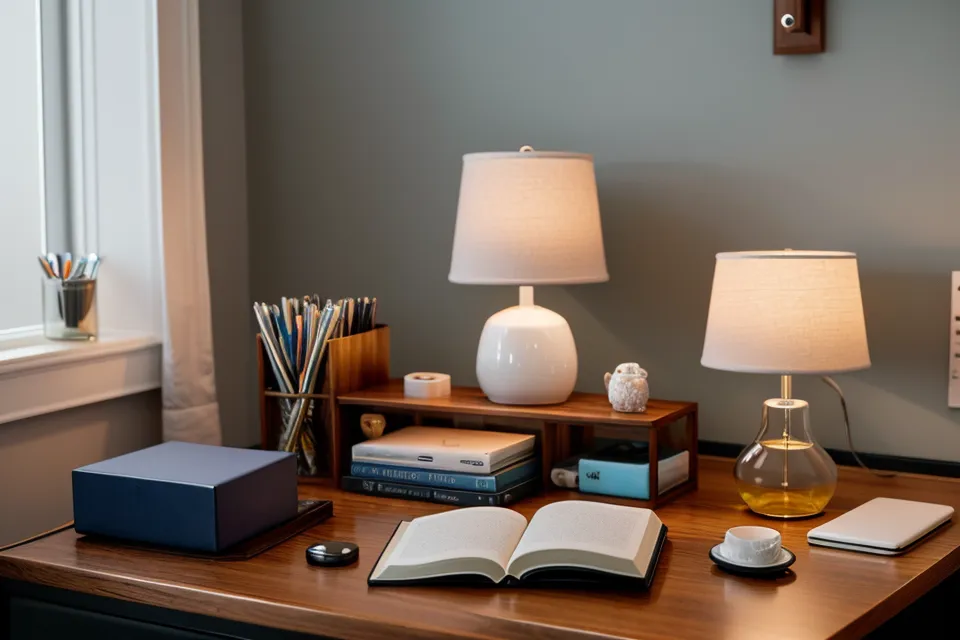
Temperature, noise, and light all sit in the same stack, and light just happens to be the cheapest and fastest one to change. Someone else's bottleneck might be a room that's too warm or too loud rather than too bright — amber bulbs are the fast first move, not the only one worth making.
Choosing Between Bright and Amber
Pick daylight-white bulbs if the bedroom doubles as a home office and you need sharp focus or fine print reading late — cool light genuinely helps with that, just not in the two hours before sleep. Pick amber if the room is only for sleeping and reading, and trading some color accuracy for an evening that actually feels like evening sounds worth it. Most people, packed calendar or not, end up somewhere in between: bright light for work hours, amber after dinner, and the laptop closed before either bulb gets to matter much.
There's a journal I keep near the bed that I don't always love opening — the weight of it flipped to yesterday's half-finished entry is a decent reminder that most of these experiments don't resolve cleanly. Some nights the amber lamps are on and I check email anyway. Both things are true at once: the bulbs help, and they don't cancel out a job that doesn't stop when the sun goes down.
Think of it like inbox triage — the goal was never zero, just getting the important stuff sorted before you stop looking at it. A bedroom doesn't need to become a wellness retreat to do its job. It just needs to stop actively arguing with the one thing you're trying to do in it.