Eleven. That's how many phone alarms I once lined up in a single night, each one labeled something like STOP TYPING or PUT IT DOWN, spaced ten minutes apart, meant to force me off my laptop before midnight. I silenced nine of them without fully waking up. The other two I actually obeyed, which is a batting average no marketing director would accept from an actual campaign.
Full disclosure before we go further: some of what's below mentions products I get a small commission on if you buy them. None of it is medical advice — I'm a marketing director who got tired of being tired, not a doctor, so treat this as one exhausted professional's experiment, not a prescription.
Here's the actual comparison I ran for a month: my bedroom as an extension of the office versus my bedroom as an actual bedroom. Not a scheduled digital detox with a hashtag attached to it, just two competing setups tested back to back, because after nodding off mid-sentence during a client presentation earlier this year, I'd hit a version of executive burnout that no wellness app was going to fix with a push notification. Work-life balance sounds like a phrase from a keynote slide until you're the one dreaming in spreadsheet formulas.
Two Versions of the Same Bedroom
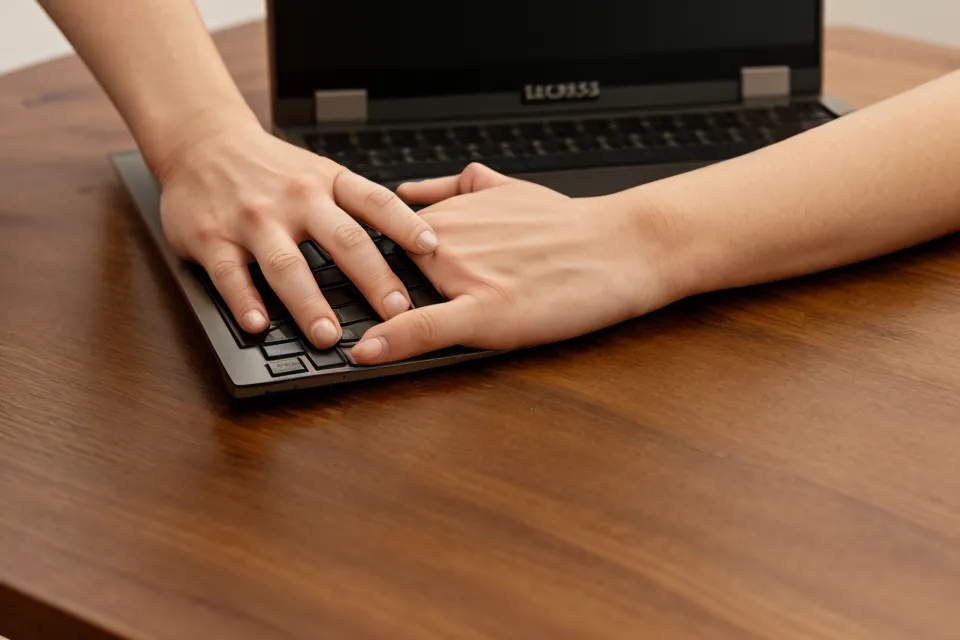
Version one had been running for years without me questioning it: laptop open on the duvet, blue light bright enough that I could see my own pulse behind my eyelids, my husband asleep like a normal person three feet away while I chased a dropping Q1 conversion number at midnight. I'd written before about the light problem itself — about late-night screen sessions and what they do to your internal clock — but glasses were a patch on a habit, not a fix for it. The real issue wasn't the light. It was that my laptop had colonized the one room in the apartment meant for something else entirely.
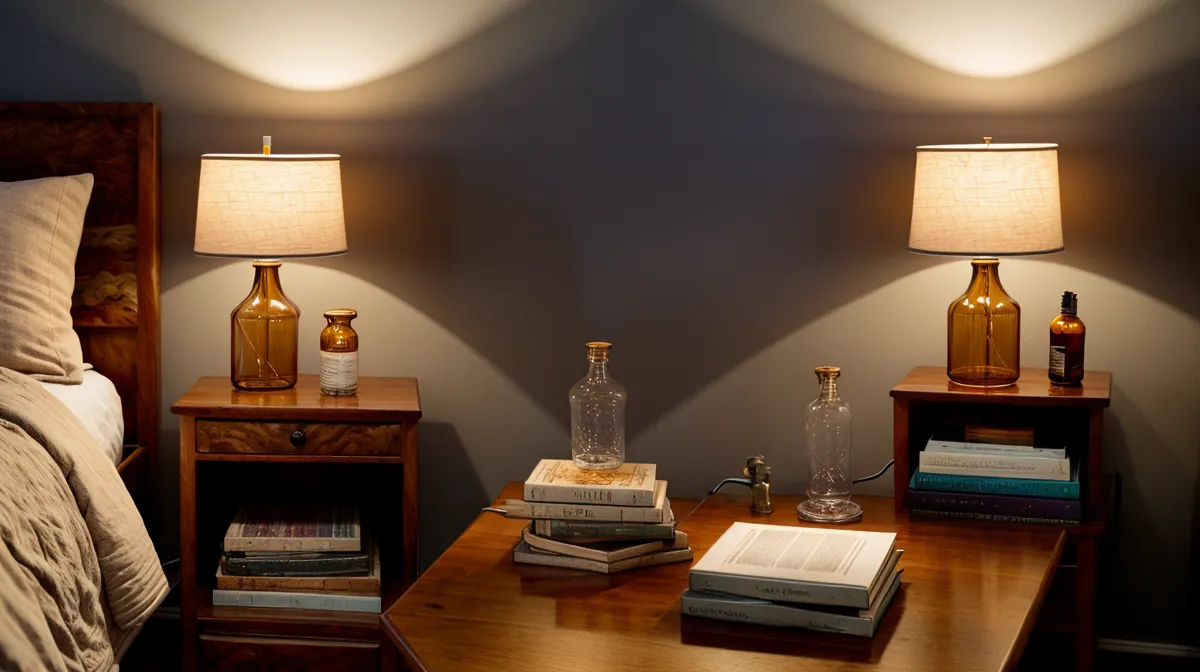
The second setup was blunter: no laptop past the living room desk, period. If work needed doing late — and in marketing, deadlines don't respect your zip code or a client's time zone — it happened at the desk, sitting up, under real light. The bedroom was for sleeping, reading an actual paper book, or lying there doing nothing, which is apparently a skill I'd lost somewhere in my thirties. I wanted to know whether separating the two rooms would move the needle on something I could actually measure: the quality of my deep sleep, not just the hours logged.
The Laptop-in-Bed Nights Were Worse Than I Admitted
Admitting version one was failing took longer than it should have. Reaching for a laptop that wasn't on the nightstand anymore felt like a phantom limb — my hand would go to that spot automatically, find a stack of unread novels instead, and my brain would spiral straight into what if the campaign breaks overnight, what if the creative team pings me about the budget at 6 a.m. That anxiety wasn't really about work. It was about not trusting myself to be unreachable.
My friend Sasha Moretti, a college friend who's now a product manager at a SaaS startup and the first person who ever sent me a sleep tracking app link, used to tease me that I treated my inbox like a smoke detector, always listening for an alarm that mostly wasn't going off. She wasn't wrong. During the roughest stretch of version one, I started taking YU SLEEP alongside the boundary experiment, mostly because I'd tried melatonin-heavy options before and hated the underwater feeling the next morning, like trying to lead a 9 a.m. status call from the bottom of a pool. This felt different, less like a knockout and more like something that gave my work brain permission to stop chattering by the time my head hit the pillow. It took roughly ten days before I noticed it reliably, and it's not the cheapest bottle on a shelf, but it cost less than the emergency lattes I was buying to survive my own brain fog, which is its own trap since caffeine lingers in your system far longer than the afternoon slump it's supposedly solving.
The Alternative: A Digital Detox With a Hard Closing Time
That second setup needed a replacement ritual, not just an absence. Guilt showed up almost immediately. There's a strange shame in being unavailable when you've spent years being praised for answering instantly, and I had to keep reminding myself that a rested marketing director sends fewer typo-laden 1 a.m. emails than an exhausted one. So I built an actual sustainable evening routine: paper books instead of a screen, and a notepad in the living room for whatever my 10 PM marketing brain wanted to solve. If it wasn't written down out there, it didn't exist until morning.
Some colleagues who fight the 2 a.m. stress-eating side of overwork mentioned SleepLean to me, which leans harder into the cortisol-driven weight gain that shows up during chronically overworked stretches — a heavier-duty, pricier option than what I was using, and one I haven't personally switched to, though it's on my radar for the next brutal launch cycle. That's the honest answer: not every product fits every schedule, and this one hasn't fit mine yet.
How Removing the Laptop Affects Sleep and Guilt
The honest answer is: mostly, but not cleanly. My sleep tracker showed something like a 25 percent jump in deep sleep once the laptop stopped coming to bed with me, and researchers have long pointed to melatonin suppression as part of why late screen exposure works against you. I'm not going to pretend I understand the full mechanism, and it's honestly not my job to explain it. What I can tell you is what changed on my end of it.
One morning near the end of that month, I woke up before my alarm went off, and there was no dread sitting in my stomach waiting to find out what had piled up overnight. Just awake, early, fine. That single morning did more to convince me than any percentage on a chart ever could. On the nights the second setup worked, I'd surface around 3 a.m. just long enough to flip my pillow to the cool side and drop right back under, instead of reaching for a glowing rectangle to check what I'd missed.
A reader named Zora Hepburn emailed me after a piece I wrote about productivity and sleep — an actual email, not a comment — describing the moment she caught herself dozing off at her desk during a grant deadline. She works in nonprofit management, and she was blunt about it: she doesn't have a corporate wellness budget to throw at insomnia the way I might. That's fair, and it's part of why the comparison that mattered most to me wasn't between two supplements. It was between a habit that costs nothing — where the laptop physically sleeps at night — and everything else I'd been trying to buy my way out of. Sleep debt doesn't care how expensive your fix is; it just wants to get paid down eventually.
None of this happened in a vacuum, either. The room itself is its own stack of variables — temperature, light, noise — and the laptop was just the loudest one I could control without buying anything new. My tracker started showing more consistent stretches of deeper sleep stages, which is its own conversation about sleep architecture for another day, and I noticed weekend naps left me groggy in that specific sleep-inertia way if I let myself sleep too long on the couch instead of protecting a consistent wake time, which does more for your internal clock than any bedtime candle ever will. A glass of wine still knocks me out fast on a hard week, but that's sedation, not real rest, and mistaking the two for each other is how I ended up exhausted in the first place.
Stack the two versions side by side and the differences stop being abstract. Deep sleep averaged that same rough 25 percent increase across the month. Morning clarity stopped requiring three cups of coffee just to parse a Slack thread — one cup became a choice instead of a survival requirement. My husband noticed I was actually in the room instead of being a screen-lit ghost next to him. And work itself got faster, not slower, because a brain that isn't running on fumes drafts a client email correctly the first time instead of the third.
The Trade-Off: When to Keep the Laptop Close, When to Lock It Out
The version that works depends on what's actually broken. If your problem is behavioral, if you keep the laptop within arm's reach because you don't trust yourself to be unreachable or because unavailability feels like career risk, then no product fixes that. Only the desk in the other room does, and no amount of guilt about being "unresponsive" changes that math. But if your problem is more physiological, if screens right before your eyes close are genuinely wrecking your body's ability to power down for the night during a launch-heavy stretch, a boundary alone might not be enough. Something like YU SLEEP is worth trying alongside it, not instead of it.
I still slip. There was one night near the end of the month when a server went down and I dragged the laptop back into the bedroom to coordinate with the dev team, and I felt like I'd blown the whole experiment over one incident. My therapist's take was simpler than mine: one bad night doesn't undo a month of a different habit. I got back on the desk the next night and didn't think about it again.
It's a little absurd that professionals like us have to schedule sleep the way we schedule a quarterly review, but that's apparently what it takes. If you're reading this on a laptop in bed right now, midnight glow and all. I get it, I was there for years. Try moving it to the other room for even one night. Your inbox survives until morning. It always has.