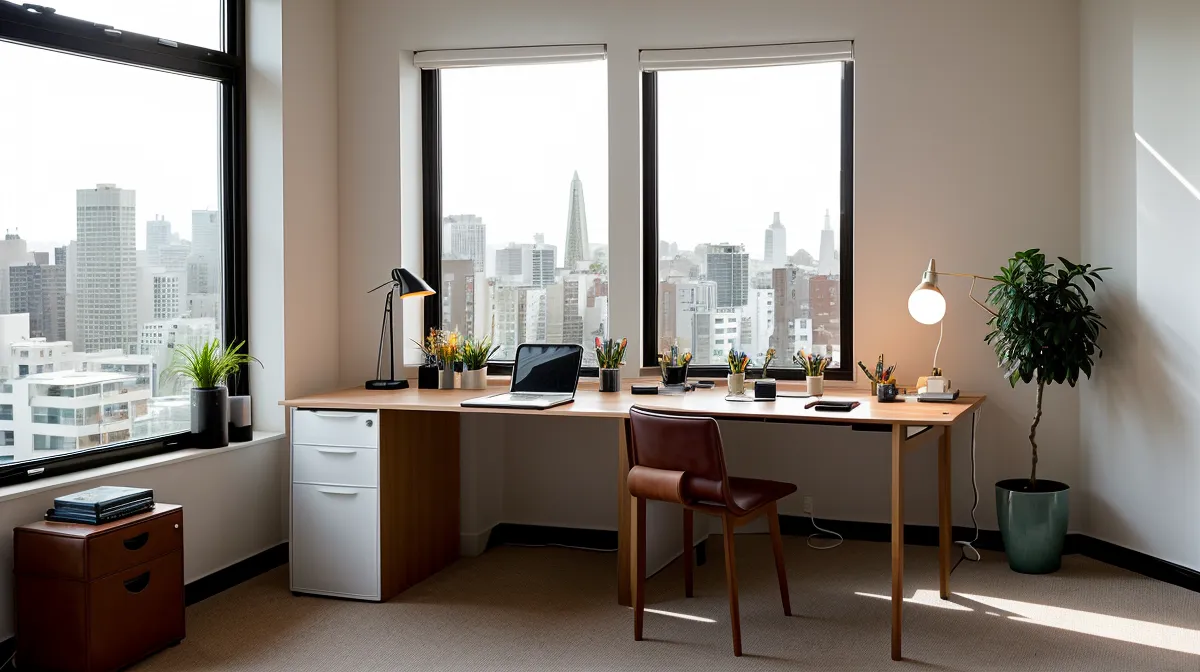
My thumb finds the trackpad again before I've even sat down on the couch, opening the laptop to check one more Slack thread that could easily wait until morning. That's usually where it starts: the workday ends on the calendar, long before it ends in my head. Getting from marketing director to a person who can actually fall asleep took more than just turning off the screen; it took a three-step evening routine, built around how busy professionals actually live rather than the version you'd find in a wellness ad — less about work-life balance and more about work-life integration, since the job never really leaves the building. Call it sleep optimization if you want the technical term. I call it damage control.
That's especially true in a city like San Francisco, where the line between office hours and personal time was thin to begin with. Here is the thing: pretending that line still exists was half of what kept me up at night in the first place. Treating an evening routine like an actual project, with steps instead of a vague intention to relax, is the only version of this that has ever outlasted good intentions alone.
Why Standard Sleep Advice Falls Short
Generic sleep advice assumes you have a calm baseline to return to every night, and most people in high-pressure roles are instead carrying real sleep debt — the accumulated shortfall from weeks of five-hour nights that doesn't reset just because you had one good Saturday. The closest I get to an actual outdoor break some weeks is lunch eaten cross-legged in Dolores Park on a Tuesday, laptop still balanced on my knees the entire time. A friend of mine spends her weekends differently, elbow-deep in clay, wheel-throwing pottery at a studio in Dogpatch, and she never seems to carry the week home with her the way I do — there's something about a spinning wheel that won't let your hands check email at the same time. I even signed up once for a four-day evening-reset course, certain a structured program would succeed where willpower kept failing, and never made it past module two before the homework itself became one more item on a list that was already too long.

Step One: Building the First Piece of an Evening Routine That Sticks
Step one is what I call the digital handoff, and it takes about fifteen minutes before anything else happens. First, I write down the three most annoying tasks waiting for tomorrow — not the big goals, just the small nagging ones, like a half-finished integration email, that otherwise resurface at midnight. Second, I close every browser tab, because a cluttered desktop is a visual reminder that the job is still technically open for business. Third, I send one short message letting my team know I'm signing off, which sets a boundary for them but mostly for me.
Timing matters here too. I've written before about when to stop drinking caffeine for better sleep on high stress days, since a coffee half-life that's still active at six in the evening will undo a perfectly good handoff by ten. The window right after you leave the office is actually the first real lever for lowering cortisol in the evening, too — even a short walk instead of scrolling through your inbox on the way home does something — though that's a bigger topic than a fifteen-minute triage can fully cover. There's also a deeper case for a full digital boundary, leaving the phone in another room entirely, but this shorter version is the minimum viable step for anyone who still needs to be reachable for a genuine emergency.
Step Two: Give Your Body a Signal, Not Just Your Brain
Step two is physical, not just mental. As soon as the laptop closes, I change clothes — out of whatever counts as a work uniform that day, into something soft — and that alone shifts how my body reads the rest of the evening. I also keep magnesium glycinate on hand for the physical side of things, alongside a glass of tart cherry juice, though what dose or combination works for your evening isn't something I'll pretend to prescribe here. I've gone into more of that reasoning in why I use magnesium for sleep and anxiety as a busy director.
None of this matters much, though, if the room itself is working against you. Temperature, light, and noise make up a whole sleep-environment stack that's worth its own deep dive on its own, but the short version is that a room running too warm will undo every other step on this list before you even notice it happening. Timing plays into sleep architecture too, in the sense of how you cycle between lighter and deeper stages across the night, though that's its own rabbit hole entirely and not one I'll pretend to map out here.

Step Three: What Happens When the Spiral Starts Anyway
Some nights the first two steps aren't enough, and I don't lie there fighting it. I get up, go to the kitchen, and reach for the journal that's already flipped open to an entry I never finished the night before — there's a strange weight to picking it up mid-thought like that, like the page has been waiting specifically for me. I write down everything: the anxieties, the loose ends, the reminder to ask about a budget line before Friday. Once it's on paper, it's out of my head, which sounds too simple to actually work and yet mostly does.
Melatonin used to be my go-to on these nights, but I moved away from it once the morning fog outweighed whatever sleep it bought me back, and I've written more about melatonin alternatives that provide better rest elsewhere.
There's a version of this same trap at industry mixers, too. A glass of wine at a networking event can feel like it knocks you out just as effectively as sleep does, but sedation and actual restorative sleep aren't the same event, even though in the moment they feel identical. Naps carry a smaller version of that same risk — they can help make up ground after a rough night, but there's a real skill to timing one short enough that you don't wake up groggier than when you laid down, which is really its own topic around sleep inertia. What holds the whole system together, more than any single step here, is going to bed and getting up at close to the same time regardless of how the previous night went; that kind of circadian anchoring does more for consistency than any individual trick on this list.
My dentist noticed the actual change before I did. She was tapping around during a routine cleaning and mentioned, almost as an aside, that the grinding pattern she'd flagged on my last couple of visits hadn't shown up this time — before I'd said a single word to her about any of this.

How Do You Know It's Actually Working?
The clearest sign isn't a number on a tracker. It's whether you can tell the difference between real tiredness and simply being done staring at a screen. If the handoff, the physical signal, and the brain dump still leave you wired most nights, that usually means one of the three is being skipped or rushed, not that the whole approach has failed. I still check Slack some nights before any of this even starts, and I still feel a flicker of guilt closing the laptop while three tasks sit unread underneath it. But the actual test I use now is simple: if I can lie down without immediately rehearsing tomorrow's meetings, the routine did its job that night. If I can't, I usually know exactly which of the three steps got skipped, which beats not knowing where to even start.