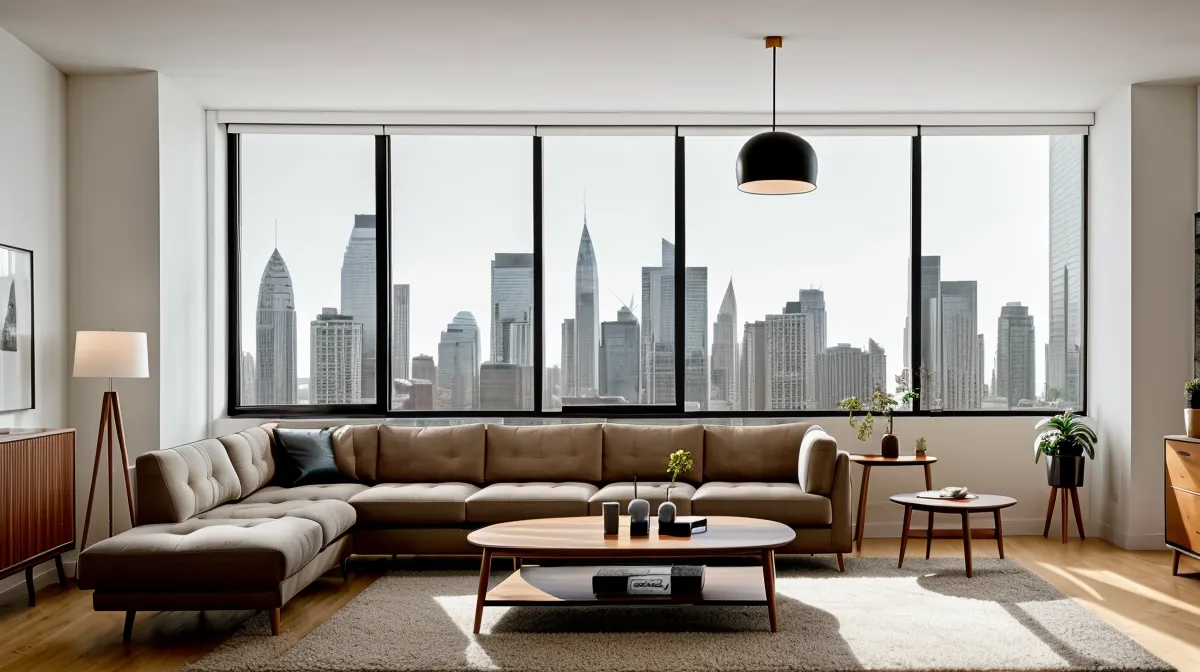
My phone buzzes against the counter before I've even set the dish towel down — a Slack ping from someone finishing their day as I'm supposedly starting mine off the clock. I glance at it anyway. That's the pattern that used to run every evening of my agency life: the job doesn't clock out just because the laptop closes, and for a long time my house never gave my body a single signal that the workday actually had an edge to it. Somewhere between managing one stressful account launch and managing my own home, I never built a boundary between the two — no home environment cue that said the demands had a stopping point for the night.
A house quiet hour, if you want the direct version, is a fixed block of time — I use one before bed — where the house itself goes quiet first: appliances off, overhead lights off, phone silenced and out of my hand, so my body gets an environmental cue before I even try to fall asleep. That's the whole idea. The habits that decide whether you actually sleep well aren't only about your mattress or the hour you go to bed — they're about what your house is doing around you in the hour before that. Everything else here is just the questions people actually ask me about it.
What Counts as a House Quiet Hour?
People ask me for a formula, so here's the honest version: no heavy appliances running, no overhead lights, phone away and silenced, and no opening a new tab for "just one more thing." I noticed my HRV and sleep quality during product launches would tank specifically whenever I let work bleed into my physical space, which is what finally pushed me to draw an actual line instead of a vague intention.
No decibel target, no wavelength number. That's not my lane, and honestly the numbers vary depending on who you ask anyway. What I can tell you is what I actually do: dishwasher and laundry wait until morning, the big ceiling light goes off in favor of one lamp, and once the house is quiet, my own circadian rhythm gets a chance to do its job instead of competing with my inbox. This isn't stress management in the productivity-hack sense. It's just removing inputs, one at a time, until there's nothing left demanding a response.

The Sleep Hack That Made Things Worse
People also ask if I tried the obvious stuff before landing on something this low-tech. I did: a stretch of sleep meditation podcasts that were supposed to talk me down, and they did the opposite. My brain treated the narrator's voice like one more input to process: following the story, guessing what came next, doing the exact analytical work I was trying to stop doing in the first place.
Somewhere around the third night of that, I realized I wasn't relaxing at all. I was just multitasking in the dark, which is a very specific kind of exhausting. The podcasts went, and the quiet stayed.
Building a Home Environment That Actually Signals Bedtime
My bedroom, tucked into the Inner Richmond, has become the place where I test all of this on myself first. The curtains blocking out the streetlight were a purchase made in the middle of the night, during one of those online-shopping spirals you fall into when you can't sleep and figure you might as well fix the problem instead of lying there. A strange little victory, but it worked. There's a mattress pad that holds a set temperature under the sheets, which matters more than I expected on the nights I can't settle into stillness.
The standing desk is still in the corner, and yes, the laptop still opens on it some nights well after I should've closed it — which tells you I haven't solved this so much as gotten marginally better at it. My phone goes face down on the nightstand next to a half-finished glass of water and a notebook where I jot down whatever's still looping, so it stops looping in my head instead.
On the nights it doesn't take, I know within the hour. I flip the pillow to the cool side, then flip it again, hunting for a version of the bed that feels less lived-in than the one I'm currently in. A colleague of mine, Winifred, from a product launch we worked on together a while back, has her evenings organized down to the minute; watching her is inspiring right up until it's mildly infuriating. Mine took longer to lock in, and it's still not that tidy.
There's also a piece I wrote about cleaning my bedroom for better sleep, which pairs well with this if visual clutter is part of what's keeping you keyed up. A quiet room that's also a mess sends a mixed signal.

Screens Don't Just Turn Off Because You Decide It's Time
Screens are the part people struggle with most, understandably. I'm not going to hand you a specific noise threshold for how quiet "quiet" needs to be. You can look up sound levels yourself if the physics interests you. What I can say is that a silent room with a lit screen in it barely counts as quiet at all.
Not taking the laptop to bed in the first place is a separate habit I'm still building, and a harder one than dimming a lamp. Some nights a book on the nightstand does more work than any overhead light ever could. That's the whole point of trading ceiling light for something warmer and lower to the ground, something that doesn't ask anything of you back.
How Do You Know If Any of This Is Actually Working?
How do you measure something like this, people ask, especially without a sleep tracker giving you a number every morning. Honestly, you mostly don't. Not precisely. You notice it in your own competence instead.
The clearest proof I've gotten wasn't a screenshot. It was during a client presentation that ran until eight at night, exactly the kind of scenario that used to have me stumbling over my own talking points. Instead the words were just there, in order, without me reaching for them mid-sentence. I noticed this strange, calm clarity while I was still talking, and realized I hadn't felt that sharp in a work setting in longer than I could place.
A reader named Belinda messaged me after an earlier post about falling asleep mid-meeting. She does shift-heavy scheduling work in healthcare administration and had almost the identical thing happen to her on a Zoom all-hands. She's the type who tracks everything in a spreadsheet before she'll commit to trying it, which is a smarter approach than mine, if I'm being fair to her. Her real question underneath the first one was whether any of this holds up without hard data behind it. My answer: it holds up in the moments that actually matter, even if I can't chart it for you.

Everything This Doesn't Fix
Here's what a quiet hour doesn't fix, because the list matters as much as the practice. It doesn't erase a backlog of short nights from a brutal quarter, and it doesn't undo the stress chemistry still circulating from a five-alarm afternoon. It won't rebuild the deeper structure of a bad night if something else entirely is doing the interrupting, it's not going to out-compete a four o'clock coffee still working on your system at eleven, and it won't make a twenty-minute nap leave you less groggy than the meeting you napped to avoid.
Temperature, light, sound, and air all stack together. A quiet hour is only the light-and-sound layer of that stack. Your body's own ability to regulate its temperature overnight is a separate mechanism from what the thermostat reads, and it carries its own weight independent of anything I'm doing with lamps.
Other pieces live outside the bedroom entirely. Waking up at roughly the same time every single day does more of the heavy lifting than anything I do the night before. What you ate two hours before bed plays its own role, and so does whether that second glass of wine at a work happy hour made falling asleep easier and staying asleep harder. That's a trade I've made more than once without meaning to.
Some people layer in a sound machine to cover a noisy street outside; others spend a few minutes on physical relaxation before they even reach the light switch, and neither is something I personally do inside this particular hour. How you're actually breathing once you're asleep is a different question altogether, and not one I'm equipped to answer. And if the noise you're fighting is inside your own head rather than in the kitchen, a written brain dump before the quiet hour starts clears more space than any dimmer switch does. I've written separately about how to stop thinking about work at night with a brain dump, and it's worth doing first.
Start With Twenty Minutes, Not Sixty
Look, if an hour feels impossible with everything on your plate this week, don't start there. Start with twenty minutes: appliances off, overhead lights off, phone silenced and out of reach. If you can't hold even that without caving, that's useful information about where the actual resistance is. It's not a personal failing, and worth knowing before you try to fix anything bigger.
Talk to your own doctor if sleep problems are persistent beyond what a quieter house can touch. I'm a marketing director who got sick of being tired, not a clinician, and this is one lever among several. It's not a cure, and not something I've fully figured out myself. Some nights the laptop still wins.