A screeching marimba alarm and a slow sunrise alarm clock can go off at the exact same minute and leave you in two completely different nervous systems. One yanks you out of deep sleep like a fire drill. The other eases you toward the surface so gently that some mornings I beat it to the punch entirely. Chasing that second version turned into a months-long hunt for an actual sleep optimization routine — mostly because the first kind of wake-up had already cost me a client presentation, live, in front of people who still bring it up, and nothing says morning fatigue quite like dozing off mid-sentence in your own deck.
Quick disclosure before anything else: there are affiliate links coming up. If you buy through one, I earn a commission at no extra cost to you — standard arrangement. I only put a product on this site after testing it through a real, deadline-heavy stretch of my own job, because that presentation disaster taught me fake fixes aren't worth anyone's limited sleep.
For most of my career, grogginess felt like proof I was working hard enough. Turns out there's a clinical name for that miserable half-awake fog: sleep inertia. I'm not going to turn this into a biology lecture — there's a whole page on that already — but the short version is that a blaring noise cutting into deep sleep floods your system with stress hormones before your feet even hit the floor. You're awake, technically. Your nervous system thinks there's a fire somewhere in the building.
A Jarring Alarm Leaves You With More Morning Fatigue Than Rest
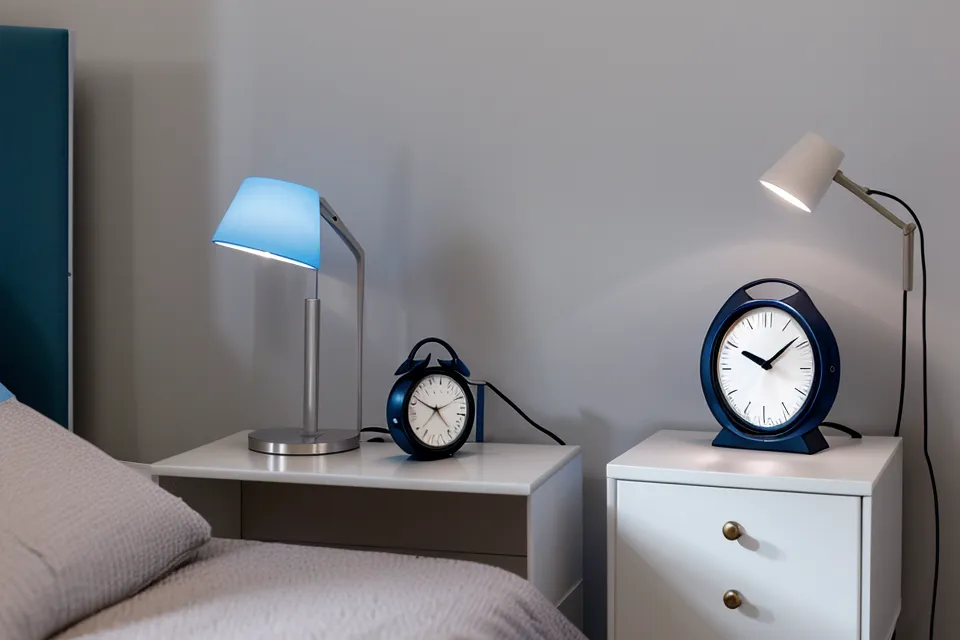
Here's the contrast that mattered more than any biology lecture: light-based wake-ups work with your body's existing signals instead of overriding them. There's a separate piece on this site about how morning sunlight resets your energy for the whole day — this is the nightstand version of that same idea, shrunk down for mornings when you can't see a window from bed. Gradual light reaches your closed eyes slowly enough that your system gets to ease into the shift instead of getting ambushed by it. If you've tried using a light therapy box for better sleep cycles during winter, you already know how much morning light can shift your mood before you've even had coffee. The question that actually mattered for my small city bedroom was which dawn simulators work when your layout is less than ideal.
Brightness Ratings vs. Bedside Geometry
Something the product pages never mention: a brightness number on a box is meaningless without knowing where the lamp will actually sit. Months of shuffling lamps around my bedroom turned up a real trade-off, and it's the single thing that changed how I judged every clock after that. High-lumen devices cut through grogginess fastest, but only within about eighteen to twenty-four inches of your pillow — push one back to a dresser across the room and that same light basically stops registering. Softer, lower-intensity models give you more flexibility about where to put them, but on a genuinely pitch-black morning, that gentler glow sometimes isn't enough to flip the switch at all.
My own testing landed on a thirty-minute light ramp, after trying both a rushed twenty-minute version and a lazier forty-minute one. Twenty felt like getting rear-ended by sunlight. Forty meant I was half-awake and scrolling my phone before the room had even finished brightening. Calibrating that timing felt a lot like scoping a project plan at work — too short and nobody's ready, too long and everyone's already checked out before the real work starts. Thirty minutes, moving from deep amber to a crisp daylight glow, was the version where I stopped waking up with a pounding pulse and started just finding my eyes open a couple of minutes before any sound kicked in.
The Sunrise Clock Wasn't Enough on Its Own

Somewhere around week six, deep in the middle of a multi-region product rollout, I hit a frustrating wall. The sunrise clock was doing exactly what it promised, ramping from soft amber to full daylight right on schedule, and I was still waking up like I'd run a marathon in my sleep overnight. By late morning, in the middle of a budget sync, my brain felt coated in something thick and slow.
That was the moment I realized a sunrise clock can open the front door, but it can't fix whatever is happening inside the house while you sleep. My actual sleep architecture — how broken or fragmented the night itself still was underneath the nice wake-up — hadn't changed at all. I'd fixed the trigger and ignored the thing the trigger was supposed to be waking me up from. It's something I'd already brushed up against while testing effective evening yoga for busy professionals to help quiet the mind — morning vitality actually starts taking shape hours before the alarm ever goes off.
I tried fixing it with sleep meditation podcasts for a while — the soft-voiced, slow-breathing kind you're supposed to drift off to. Mine did the opposite. My brain treated the narration like a puzzle instead of a lullaby, picking apart the pacing and the weird pauses between sentences until I was more alert at midnight than I'd been at dinner. That one didn't work, and it took me embarrassingly long to admit it and just turn the thing off.
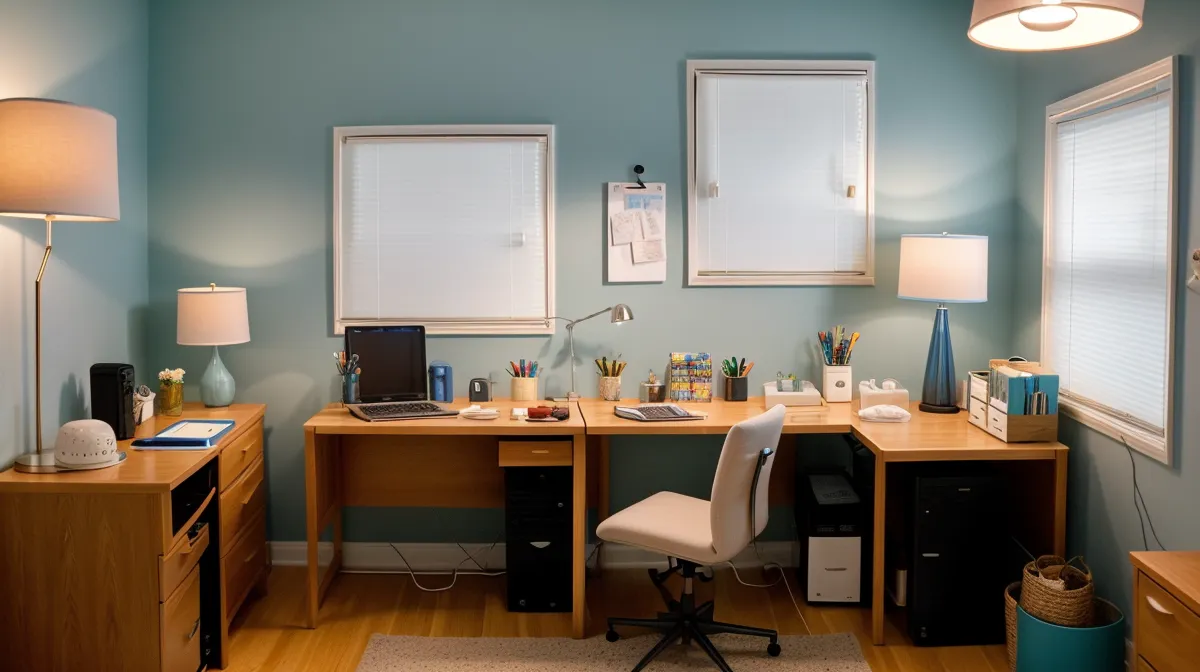
Half the problem was obvious once I was honest about it. The standing desk in the corner of my bedroom still saw my laptop open most nights well past ten, and that particular quiet right after I finally shut the lid — the fan spinning down into real silence — had quietly become the actual signal my body was waiting for before it would consider sleeping. There's a whole piece on this site about ditching the laptop-in-bed habit entirely; I never fully managed that, but just noticing the pattern mattered.
What finally told me something had shifted wasn't an app or a podcast — it was waking up on my own, a few minutes before the light even finished its ramp, with nothing waiting for me. No dread, no mental scramble, just awake, like my body had quietly decided on its own that it was done for the night.
Pairing Light With Something for the Inside
To actually solve the morning-fatigue equation, the external light needed something internal to work with. Over several months I tested three different nighttime approaches alongside the sunrise clock, looking for whichever one held up during the worst weeks instead of just the easy ones.
My clear favorite through all of it has been YU SLEEP. What sold me was a clean ingredient profile that skips the heavy synthetic melatonin, so there's no groggy pill-hangover feeling the next morning. I noticed a subtle shift in the first week, and within about ten days, the combination of deeper sleep and the sunrise alarm felt like a genuinely different experience — waking up at the light's peak instead of being dragged out of it. Current pricing lives on their official site and shifts depending on which bundle you pick, and it comes with a sixty-day guarantee if it doesn't work out for you.
For colleagues who mention nighttime stress alongside sluggish metabolism in the same breath, SleepLean is worth a look. It pairs sleep-supporting botanicals with ingredients aimed at nighttime metabolism, in a higher-dose formula that makes sense if that dual goal matches what you're after. Pricing sits on the higher end and is maintained on the vendor's own site, reflecting that more premium positioning.
Then there's ChronoBoost Pro, which takes a three-in-one approach aimed at nighttime rest, brain function, and daytime energy together. I wrote separately about using ChronoBoost Pro for cognitive function and sleep deprivation during a particularly brutal launch stretch. It's stimulant-free and non-habit-forming, and it's worth checking their checkout page directly since the bundle sizing changes what you actually end up paying per month.
A reader named Belinda Sato messaged me not long ago, after finding the post about the presentation disaster through LinkedIn. The exact same thing had happened to her on a Zoom all-hands — she works in healthcare administration, dealing with shift-adjacent scheduling that makes consistent sleep almost a joke. She's the type who tracks everything in a spreadsheet before trying anything new, and when she asked which of these three I'd actually stand behind for someone with an unpredictable schedule, I realized I needed a real answer, not just enthusiasm.
Here's how the three stack up against each other when you're comparing them for a genuinely busy routine, side by side.
What a Realistic Morning Routine Actually Looks Like
By late summer, the pieces settled into something that actually held together. I stopped expecting one gadget to undo years of treating fatigue like a line item on my to-do list, and built something more forgiving instead — a system that survives a fifty-hour week instead of falling apart during one.
The actual setup looks like this: the sunrise clock sits close enough to reach the pillow, inside that eighteen-to-twenty-four-inch zone, because that's the difference between light that registers and light that's just decorative. The ramp runs thirty minutes, moving slow enough that my brain gets to shift out of deep sleep before any backup chime even starts. The backup sound itself stays soft — birdsong or an ascending piano line, never anything percussive — because by the time it plays, I'm usually already most of the way to awake.
Blackout curtains over the window came from a two-a.m. Amazon spiral months back, which is a fairly on-brand way for this whole project to have started. The mattress pad keeps the bed at a steady temperature, so I'm not fighting the heat at three in the morning, and the sleep journal on the nightstand — parked next to a glass of water and my phone, always face-down — is where I actually track whether any of this is working instead of just assuming it is. Taking YU SLEEP consistently gave me a deeper, less interrupted baseline, the kind that let the morning light do its job instead of fighting against a night that never properly recovered.
My colleague Winifred Cho — who color-codes her calendar in such complete blocks that I've genuinely never seen her double-booked, which I find both impressive and a little bit maddening — asked recently why a sunrise clock made that much difference when I could've just tried harder to go to bed on time. The honest answer is that stacking willpower on top of an already broken wake-up doesn't fix the wake-up. It just adds more things to fail at.
Worth saying plainly: talk to your own doctor before starting any new supplement routine, especially if you deal with chronic sleep issues or take other medication regularly. What worked for my schedule might need real adjustment for yours.
Progress, Not Perfection, Still Wins
Most days, things are still chaotic, to be clear about that. Slack still buzzes the second European teams come online, and there are evenings I still catch myself answering email on that same bedroom laptop long after I should've closed it. My therapist's line hasn't changed either: progress, not perfection.
A few Saturdays ago I actually made it to the Ferry Building Farmers Market before a single Slack notification had buzzed — something that would have been unthinkable during the worst stretch of bad mornings. That's the real difference now: I don't start the workday in a state of acoustic panic anymore. Pairing a close-range dawn simulation clock with something like YU SLEEP pulled me out of that cycle of panic-waking and mid-morning crashes. If your mornings still start on the back foot, your nervous system deserves a wake-up that's gradual instead of hostile.
| Product | Rating | |
|---|---|---|
| YU SLEEP Top Pick | 9.2 | Read More → |
| SleepLean | 8.5 | Read More → |
| ChronoBoost Pro | 8.1 | Read More → |
YU SLEEP
Pros
- + Noticeable improvement within the first week
- + Natural ingredients without melatonin dependency
- + 60-day money-back guarantee
- + Zero morning grogginess or pill hangover
Cons
- ▹ Only available on official website
- ▹ Results vary — took me 10 days to notice a real difference