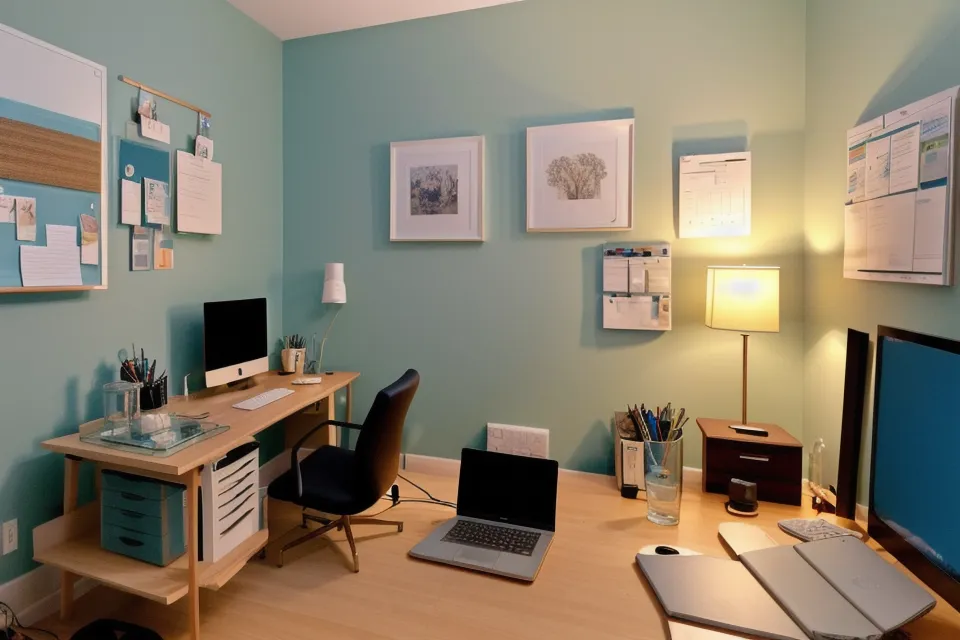
The lamp's already half out of the box when I catch my own reflection in the window, lit up blue-white like a conference room, laptop still open on the standing desk in the corner, a Slack notification blinking at an hour that has no business involving work. That's the exact moment I stopped treating bedroom lighting as decor and started treating it as something that either supports my circadian rhythm or actively fights it. Here's the misconception I bought into for way too long: swap the harsh ceiling light for a warmer bulb and the sleep problem solves itself. It doesn't. Color temperature is maybe a third of the story. Brightness and where the light physically sits in the room matter just as much, and almost nobody mentions that part.
Most advice stops at the bulb color, which is why people buy a warm white light and still can't fall asleep. A 2700K bulb blasting at full brightness from a ceiling fixture is still, biologically, close enough to daylight that your body doesn't fully believe the day is over. Sleep researchers generally point to something like 50 lux as a reasonable ceiling for the hour or two before bed — for context, a typical office runs around 500 lux. Ten times brighter than it needs to be, color temperature aside. That gap between warm and actually dim is where most bedroom lighting advice quietly fails.
The Bedroom Design Myth About Warm Bulbs
A few weeks before a client renewal deadline, I ran an entire call from bed, laptop balanced on a pillow, every light in the apartment blazing because brighter felt like it signaled competent and awake. It did the opposite for my sleep that night. Harsh overhead light this late doesn't just confuse your internal clock — it keeps your stress response running hotter than it needs to, which is its own rabbit hole I won't fully get into here. The light itself was the problem, not just the looming deadline.
Why Light Position Matters for Your Circadian Rhythm
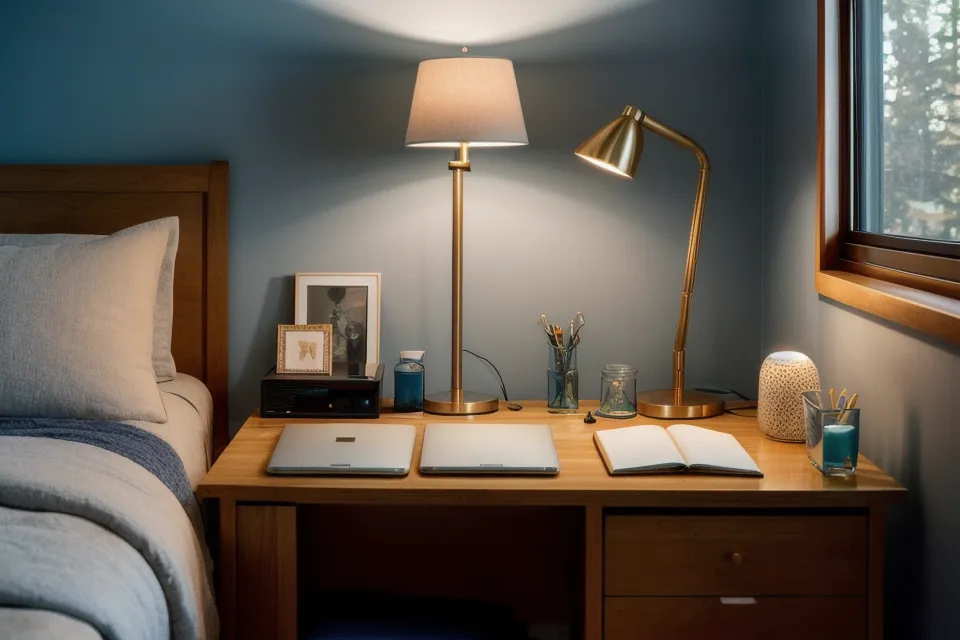
Here's the thing nobody explained to me simply: it's not just about brightness, it's about where the light comes from. Overhead light seems to register differently in your body than light from somewhere low in the room — something to do with how your eyes are built to notice light coming from above, the way sunlight would. I'm not going to pretend I fully understand the mechanism. What I know is that the cells behind this reaction connect to a receptor called melanopsin, part of the same system that regulates your circadian rhythm. Once I stopped using the ceiling light after sundown and switched to floor lamps sitting below eye level, the room stopped reading as office to my brain, even on nights when I was technically still working in it.
Around the same time I was testing all this, I also went down the supplement road for a while, which I wrote about separately in Beyond the Pill: My Honest Take on Magnesium, Melatonin, and the Prescription Route. The lighting change is what actually held up once the novelty of trying new things wore off.
The Bathroom Light Nobody Thinks About
Nighttime bathroom trips are where this whole plan used to fall apart. Flipping on a full vanity light at whatever hour undoes an entire evening of careful dimming in about two seconds, and I did exactly that nightly for longer than I want to admit before switching to a small red, motion-activated light that's just bright enough to avoid stubbing a toe. Red light barely registers with the part of your brain tracking day versus night, so the middle-of-the-night bathroom run stopped resetting my whole system.
Before any of this clicked, I tried the thing everyone suggests first — chamomile tea, every night, for two straight weeks, tracked against my sleep score the whole time. Zero measurable difference. My friend Damien, who's convinced enough data will eventually fix his own insomnia, still brings this up whenever lighting comes up in conversation, mostly because it bothers him that something this unglamorous outperformed his spreadsheets. There was one ordinary morning not long after the lighting switch where I opened my eyes a few minutes before my alarm and just lay there for a second, waiting for the usual jolt of dread before a workday — and it didn't show up. That's a small thing. It's also the first time in a long while that waking up didn't feel like the day was already winning.
Building an Evening Routine Without a Spreadsheet
None of this matters much if you're staring at a bright screen right up until lights-out, which is its own fight — I covered that separately in Managing Eye Strain and Sleep Quality After Hours of Screen Time. But assuming the screen issue is at least partly handled, building an actual lighting routine took less engineering than it sounds.
Once the sun goes down, the overhead lights stay off completely and the floor lamps take over, set to that warmer, low range. By the time deadlines or emails would normally pull me back to the laptop, I dim everything by roughly half and keep a blue light filter on if I'm still working, which happens more than I'd like to admit. A while later, it's down to one small amber or red lamp, and that becomes the unofficial cutoff for anything work-related. This isn't about anchoring your body clock through some elaborate system — it's closer to not fighting the signal your brain is already waiting for. Morning light exposure is a completely different piece of this puzzle, and arguably a bigger lever for energy than anything happening at night, but that's a separate conversation from what's wrecking your evenings.
If your phone is the last thing fighting you before sleep, Breaking the Blue Light Habit: How I Finally Put My Phone Away and Reclaimed My Rest covers that fight in detail. Pairing that change with the lighting changes is what actually moved things for me.
Where This Still Falls Apart
Bad nights still happen. Deadline weeks pull me back under the bright overhead light some evenings, laptop open too late, inbox winning the argument. The difference now is that those nights are the exception, and I know exactly why they wreck my sleep instead of just feeling generally awful the next day without understanding why. If you take one thing from this: check the color of your bulbs, sure, but also check how bright the room actually is after dark, and whether your main light source sits above eye level or below it. Fixing only the color and ignoring the other two is the version of this advice that leaves people confused about why a warm bulb alone changed nothing.
Talk to an actual doctor if sleep has been a real problem for a long stretch — lighting is one piece of this, not a cure-all, and I'd rather say that plainly than oversell a lamp. But if you're squinting under a 5000K bulb at nine at night wondering why your brain won't power down, that part, at least, has a fairly easy fix.