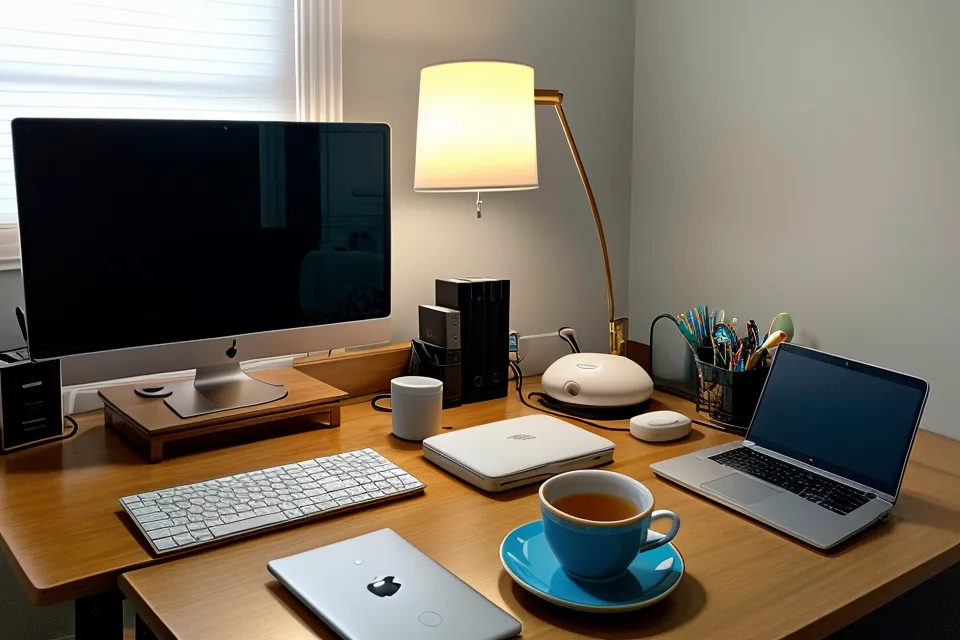
Dry, burning eyes and a brain that won't power down feel like two separate complaints. They're the same complaint, just showing up in different places. Spend ten hours moving between video calls, spreadsheets, and a phone that never stops buzzing, and eye health and sleep quality stop being separate topics — they turn into one long argument your body has with itself every night. I used to treat the gritty, sandpaper feeling behind my eyes as a normal cost of doing business in marketing. Now I treat it as the first warning sign that my digital wellness and my work-life balance are both about to fall apart on the same night.
These are the questions people actually ask me about screen time, eye strain, and the sleep it quietly wrecks — along with the honest answers, including the stuff that flat-out did not work.
Why Burning Eyes and a Wired Brain Are the Same Problem
Short answer: light and strain don't stay in your eyes. A full day of close-up screen focus keeps your eye muscles in a constant low-grade clench, and that clench doesn't release just because you closed the laptop — it travels into your jaw, your shoulders, and straight into the part of your nervous system that's supposed to be downshifting for sleep. The technical name for the eye-focused version of this is Computer Vision Syndrome, and once I read about it I stopped assuming the ache behind my eyes at 9 p.m. had nothing to do with still being wide awake at midnight. It's also loosely tied to what some people call circadian anchoring — the idea that light exposure earlier in the day sets the schedule your body tries to follow that night — though that's really its own rabbit hole.
Blue Light Isn't the Only Villain Here
Not exactly, and this one surprised me too. For months I wore orange-tinted blue light blockers during late work sessions, and all they did was make me foggy around 8 p.m. while I still had two more hours of work left. Groggy but obligated is a bad combination. I'd reach for a second wind, usually caffeine late enough that it was still circulating when I tried to fall asleep. Caffeine's half-life is long enough that a mid-afternoon coffee can still have a real chunk of its punch left at bedtime, which is a separate topic on its own. A glass of wine to counter that wired screen feeling just trades one problem for another, too. That's sedation, not sleep, and the two aren't the same thing even though they can feel similar for about twenty minutes. I've written separately about where I draw my midday caffeine cutoff, and those blockers kept tempting me to blow right past it. Now I keep screens bright while I'm actually working, finish faster, and close the laptop sooner — fewer total hours of exposure beats filtering the glow while dragging the workday out another ninety minutes.
Checking Email in a Dark Room, Explained
Here's the thing nobody warns you about: light as dim as 30 lux, dimmer than most bathroom nightlights, is enough to blunt melatonin release. Opening your inbox in a pitch-black room tells your brain it's the middle of the afternoon on Market Street, not bedtime. Breaking that one specific habit — phone as the last thing I look at and the first thing I grab — mattered more than any eye drop or ergonomic chair I ever bought. I wrote at length about breaking the blue light habit on my phone specifically, because it was the hardest crutch to put down. Building any real gap between the last screen and the first pillow, a kind of digital off-ramp, turned out to matter more than people expect.
Making the 20-20-20 Rule Stick During a Packed Calendar
Mostly, yes, if you make it unmissable. Blink rate drops by roughly half to two-thirds when we stare at a screen, so your eyes dry out while you're too busy obsessing over click-through rates to notice. The actual rule is simple: every 20 minutes, look at something 20 feet away for 20 seconds. The hard part is remembering it mid-pitch. I ended up setting a silent haptic alarm on my watch because my internal clock is apparently calibrated to keep going until something hurts. It isn't a cure for anything — just a forced pause that stops the day's accumulated strain from fully compounding by dinnertime.
What's Behind the Hot, Heavy Feeling Behind Your Eyes at Night?
That specific sensation — a dull, heavy heat sitting behind the brow bone, sometimes paired with a rhythmic eyelid twitch after hour four of a dense spreadsheet — is your nervous system still stuck in work mode, not just tired eye muscles. The eyes and the stress response share more wiring than people realize. When your eyes are straining, heart rate tends to stay elevated, which is part of why I started paying attention to circadian rhythm instead of just blinking exercises. There's a whole separate conversation about accumulated sleep debt and how strain-heavy weeks stack up over a bad quarter, and another one about getting cortisol to actually settle in the evening instead of staying revved from the day's last three Slack threads — both worth exploring on their own, neither something I can do justice to here.
Testing a Weighted Eye Mask Against an Actual Reset
It helped more than I expected, though it isn't magic. I tried a handful of recovery approaches, including a magnesium and melatonin routine I've written about honestly elsewhere, and the thing that worked best specifically for the eye heat was almost embarrassingly simple: a weighted silk mask and five full minutes of real silence before attempting sleep. It's a milder cousin of formal techniques like progressive muscle relaxation, just without the structure. Warm, dim lighting in the evening instead of overhead LEDs helped too, closer to mimicking sunset than noon. None of it required a gadget, and the small ritual itself seems to matter — your brain starts associating that five minutes with sleep rather than the mask doing anything chemical.
One thing that absolutely did not work: I signed up for a four-day online sleep bootcamp that promised a full nightly overhaul, and I never made it past module two. Zero follow-through after that, and a useful reminder that I don't need a structured program so much as two or three habits I'll actually repeat.
Working Late Without Wrecking Your Work-Life Balance
Then protect the last twenty minutes, not the whole evening. A full digital cutoff by a fixed hour sounds great and rarely survives a real launch week. What actually helps is a short buffer: screen off, lights warm, and something to offload the mental tabs still open in your head — a notebook works better than it should for this, basically a quick brain dump before the pillow. Morning light matters just as much as evening light, maybe more. Getting outside early does more for resetting your clock than any blocker filter does at night. Weekend mornings at the Marin Headlands overlook, phone left in the car, do more for my eyes and my head than any serum or drop ever has.
The Screen Is Rarely the Whole Story
Usually it's both, and separating them perfectly isn't necessary. Room temperature matters more than most people account for, since body temperature needs to drop to fall asleep, so a room that's too warm fights you even with perfect eye care. Temperature, noise, light, bedding — the whole stack of your sleep environment compounds together, and eye strain is just one layer sitting on top of it. How you're breathing at night, nose versus mouth, is yet another variable people are experimenting with now, separate from anything to do with screens. A friend of mine spends her weekends elbow-deep in wet clay at a pottery studio in Dogpatch, hours with zero screens in sight, and she sleeps noticeably better on those nights without changing anything else — which tells you something about how much the screen itself is doing versus the strain layered underneath it. Traffic noise used to slip in around the bottom of my bedroom door and pull me out of light sleep, until a steady hum from a sound machine buried it enough that my brain stopped flagging every car door slam, which is really just acoustic masking doing its job. None of this replaces an actual conversation with a doctor if your eyes or your sleep feel genuinely wrong, not just tired.
How Do You Know Any of This Is Actually Working?
Watch the gap between closing the laptop and actually feeling sleepy, not just the hours you logged in bed. The clearest proof I have is one ordinary night after a board meeting that had gone sideways for two hours straight — I expected to lie there replaying every bad moment, and instead I was asleep within twenty minutes, still half in my work clothes, lamp still on. That gap used to run an hour or more, Slack notification included. You don't need a wearable tracking heart rate variability to notice a shift like that, though that's its own useful rabbit hole for the data-minded, and the deeper structure of the sleep itself is a layer worth tracking separately too.
I still work too much. I still catch myself squinting at a message I should have left until morning. The difference is that the gritty, sandpaper feeling behind my eyes no longer reads as a normal cost of the job. It reads as a signal to stop, and most nights now, I actually listen to it. Progress, not perfection, same as my therapist keeps telling me.