A real HEPA filter and something labeled "HEPA-type" sound like the same purchase — right up until you've slept next to both, in an actual city apartment, for a few months. One changes the air quality in your bedroom. The other is mostly a sticker. I learned the difference the hard way, in the Inner Richmond bedroom where I test most of what ends up on this site, during a stretch where I kept waking up with a stuffed-up head and blamed everything except the air I was breathing all night.
Falling asleep during a client presentation is still the most humiliating story I tell about my old life, and it's the one that started this whole audit of my own sleep environment. The air thing came later, almost by accident, and it surprised me more than any app or supplement had.
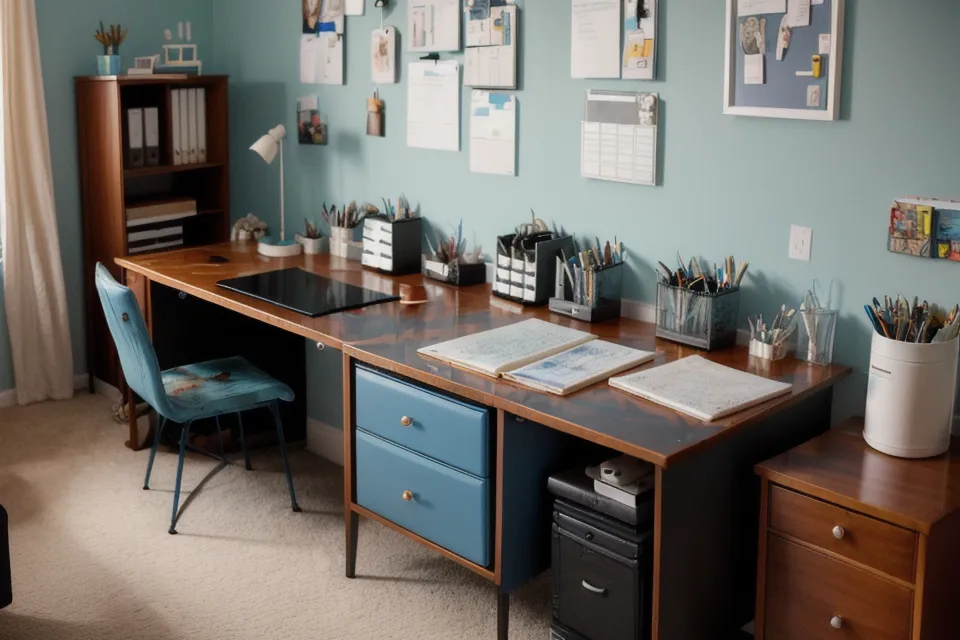
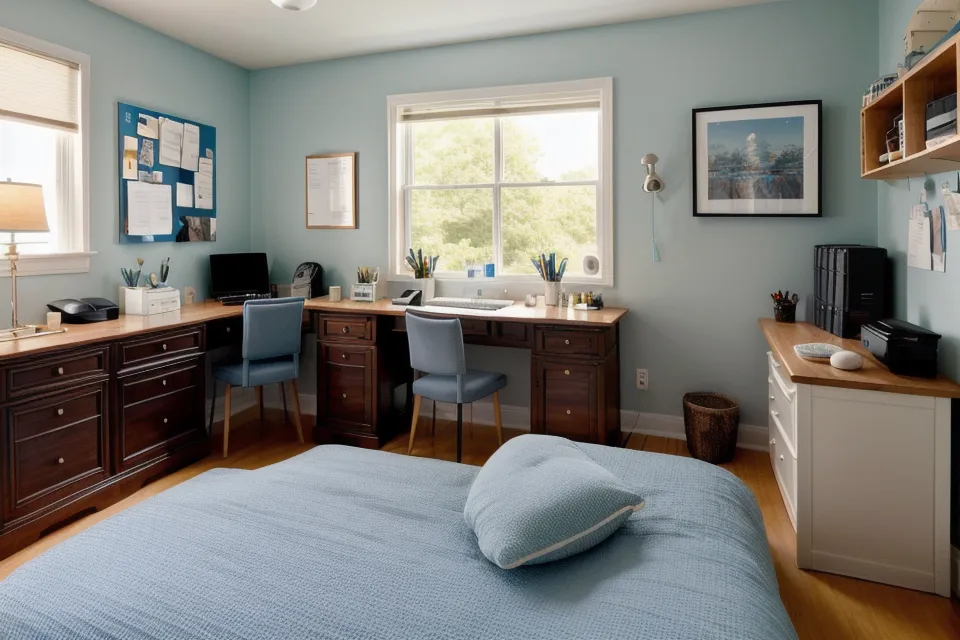
The bedroom itself is small: blackout curtains I bought during a 2 a.m. Amazon spiral, a mattress pad that holds a set temperature all night, a standing desk in the corner where the laptop still creeps open some nights after ten, and a sleep journal on the nightstand next to a water glass and a phone I make myself leave face-down. On paper, it looks like a place built for rest.
That curtain habit turned into its own blackout curtains project a while back, but nobody warned me about what was floating around behind them. Grey dust collected on my windowsill every few days no matter how often I wiped it down, and if it was landing on furniture, it was landing in my lungs too, all night, every night.
Why 'HEPA-Type' Isn't the Same Thing as HEPA
Researching air purifiers felt a lot like prepping for a product launch: too many acronyms, half of them clearly written by someone in marketing. Actual HEPA filtration is the one standard that matters: a filter rated to capture 99.97% of particles down to 0.3 microns. That's the number to look for, full stop.
Anything marketed as "HEPA-type" or "HEPA-like" is what we'd call a weasel word in my own line of work. It sounds official. It isn't. True medical-grade filtration is graded H13, and once you know a city bedroom is full of brake dust and construction particles at 0.3 microns, "like" stops being good enough.
Reading My Bedroom Like a CADR and ACH Report
CADR — Clean Air Delivery Rate — measures how much actually-clean air a machine produces per minute, and it ended up mattering more than any spec I'd looked at first. My friend Damien, who's convinced a big enough spreadsheet will eventually solve his own insomnia, was the one who got fixated on the air-changes-per-hour number with me over text one night, both of us treating a bedroom fan speed like a KPI for maybe the first time in either of our lives.
We landed on roughly 4.8 air changes per hour for a room my size, which works out to a full cycle of clean, filtered air about every twelve and a half minutes. Put that in a stagnant city apartment where the windows barely open, and it stops sounding like a spec sheet and starts sounding like the whole point.
The 30-Day Rule That Didn't Survive a Product Launch
Around the same time, I tried pairing the purifier with a 30-day no-screens-after-9-p.m. rule, mostly because I'd read that stacking habits makes them stick better. It fell apart by day five, buried under a product launch that had me answering Slack messages past midnight most nights. The purifier kept running regardless. The screen rule needed willpower I didn't have that month.
That contrast taught me more than a clean success or a clean failure would have on its own: the changes that ask nothing of your discipline are the ones that survive a bad quarter. A machine humming in the corner doesn't care how your launch is going. A rule you have to remember to follow does.
What Actually Changed by Week Twelve?
Air quality turned out to be one piece of a bigger sleep environment stack, right alongside room temperature, and I didn't clock that until the easy part was already fixed. By week twelve of paying attention to all of it, the morning congestion that used to send me reaching for saline spray without even registering I was doing it had quietly stopped, and I only noticed because I went looking for the bottle and couldn't remember the last time I'd used it.
One night stands out more than the rest. I got home from a board meeting that had gone sideways, certain I'd lie there running it back for hours, and instead I was asleep in twenty minutes flat. The following Saturday I actually got up for the hike I'd promised myself at the Marin Headlands overlook, instead of sleeping through the alarm the way I usually did. Rowan Ng, a former colleague who found this site by accident and never quite let me live it down, texted me out of nowhere not long ago just to report his own CO2 monitor reading, like that's a normal way to open a conversation. At this point, for both of us, it kind of is.
If you want to see where air quality actually ranks against everything else I've tried and tracked, the sleep optimization methods compared breakdown lays it out better than one anecdote can.
Is a Quieter Fan Actually Better for Sleep?
Here's the thing nobody selling these machines wants to tell you: the whisper-quiet "sleep mode" can work against you. It sounds ideal — dim lights, barely-there fan — but in a small apartment with the door shut for noise or light, CO2 can build up faster than that setting clears it. I felt groggier, not less groggy, on the quietest setting, which was the opposite of what I paid for.
Dropping to a medium fan speed fixed it. Louder, yes, slightly — but steady enough that the air kept moving and the sound stayed consistent all night instead of cycling on and off. It layers well with using pink noise for better sleep, and together they've become the closest thing I have to a reliable off-switch for a brain that's still half in work mode at 11 p.m.
Progress, Not Perfection
During the worst of this year's air quality inversion, the sensor on my machine went from purple to red every time I cracked the bedroom door — a small daily reminder that I can't control the smog, the deadlines, or the Slack notifications that never fully stop. Waking up without a scratchy throat or a pounding sinus headache turned out to be a genuinely tangible win, even though it fixed nothing about the actual 50-hour week underneath it.
None of this fixes the parts of my life that are actually the problem. I still open my laptop later than I should some nights, still have weeks where my brain won't drop a project no matter how clean the air is. But if there's one thing I'd tell anyone starting this: fix the air before you fix anything harder. It's the rare sleep problem you can actually solve in an afternoon, and it makes every other change you try afterward work a little better. Talk to an actual doctor if congestion or sleep issues are chronic — a fan is not a substitute for that.