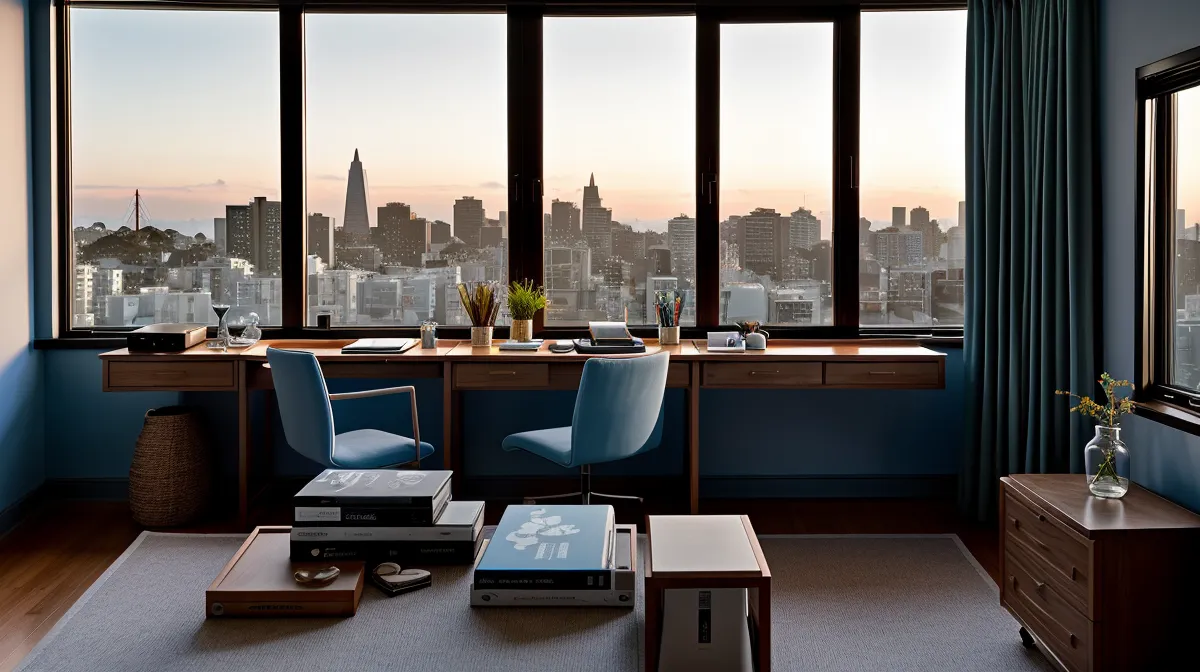
Four hours into a strategy offsite, deep in a slide review nobody actually asked me to lead, and it hits me: no 2 p.m. wall. Not even a flicker of one. Usually by hour two I'm negotiating with a vending machine in my head, but I'm still just there, sharp, tracking numbers on a shared screen, not thinking about food at all. That's the moment I actually believed something about my late-night cravings and my sleep quality had shifted. Not fixed. Not perfect. Just genuinely different from where I started.
Quick disclosure before we go further: this post has affiliate links, the type where I might earn a small commission if you click through and buy something, at no extra cost to you. Everything I mention is something I've actually used during real deadline weeks, not staged, comfortable ones. I'm a marketing director, not a doctor, so please don't take any of this as medical advice, sleep supplements included. Talk to your own physician. Executive burnout has made half of marketing director life feel like an endurance sport, and none of us should be self-medicating our way through it without a professional's input.
Here's the thing: nobody explained any of this to me in a straightforward way when I actually needed it, so instead of another journal-style recap, I'm answering the questions people keep sending me since I started writing about this openly.
Why Does a Late-Night Slack Ping Turn Into a Craving?
Because your body doesn't know the difference between a deadline and a predator. When you're on a call with Tokyo at 9 p.m. and then syncing with a Singapore team past midnight, your circadian rhythm stops being a rhythm at all. It's just noise. Every one of those calls leaves a specific taste in my mouth, something like burnt coffee and a dry throat, and by the time I close the laptop, I'm what I've started calling tired but wired: exhausted enough to sleep, alert enough that my brain refuses.
The Midnight Chemistry Nobody Explains Well
Short version, because I'm not going to pretend I can give you the long one: stress hormones spike when they should be dropping, and that spike tells your body to go looking for fast fuel. This is the part people call the cortisol and ghrelin connection, and I'm not turning this into a biology lecture. I read enough of those trying to fix my own nights and mostly ended up more confused than before. What I can tell you is what it feels like from the inside: your brain stops asking for something reasonable and starts asking for chips, or in my case, cold deli turkey eaten straight out of the container over the kitchen sink at midnight, because heaven forbid I use a plate. It's less about willpower and more about a signal telling your body a threat is still active, even though the actual threat is a slide deck due in six hours.
The Screen Rule That Didn't Survive a Product Launch
I tried the extreme version first, like most people do. Thirty days, no screens after 9 p.m., a rule I built with genuine enthusiasm on a Sunday afternoon. It collapsed by day five, right in the middle of a product launch, when a vendor issue needed three rounds of emails before midnight and my phone was the only tool I had. Rules built for a calm version of your life don't survive contact with the actual one. I've already written about the mental side of this fight, the part where your brain won't stop replaying the day's meetings even after the laptop closes, in Dealing with the 10 PM Marketing Brain Second Wind, and it turns out cravings are the other half of that same problem, not a separate one.
Closing the Gap Between Finishing Work and Feeling Sleepy
That gap is where the cravings live. You finish work, but your body hasn't gotten the memo, so there's a dead zone where you're not working anymore but nowhere near ready to sleep either, and your hands just want something to do. Mine wanted to open the fridge. I started wearing blue light blocking glasses for late night emails to see if I could trick the tail end of my evening into feeling less like work, and it helped some, but glasses don't stop a hunger signal; they just quiet one input. A friend of mine, Damien, keeps insisting that data will eventually fix everything, his insomnia included, and I understand the instinct, I used to think the same thing, but a spreadsheet doesn't lower your cortisol on its own. Somebody has to actually change what they're doing at 11 p.m., not just log it more precisely.
Do Sleep Supplements Actually Help With Cravings, or Just Sleep?
Both, if you pick one built for both. Most sleep supplements are aimed purely at getting you unconscious faster, which is useful but doesn't touch the part where you're standing in your kitchen at midnight over a plastic container. I started using SleepLean specifically because it was built around that metabolism-and-craving connection rather than sedation alone, and the difference showed up less in how fast I fell asleep and more in whether I even made it to the fridge that night. I wasn't reaching for a big snack most nights anymore, which meant mornings stopped feeling like I was climbing out of wet cement. I'm not a health professional and I won't pretend this works identically for everyone; bodies are stubborn and specific; but for someone managing a schedule with no real off-hours, it mattered.
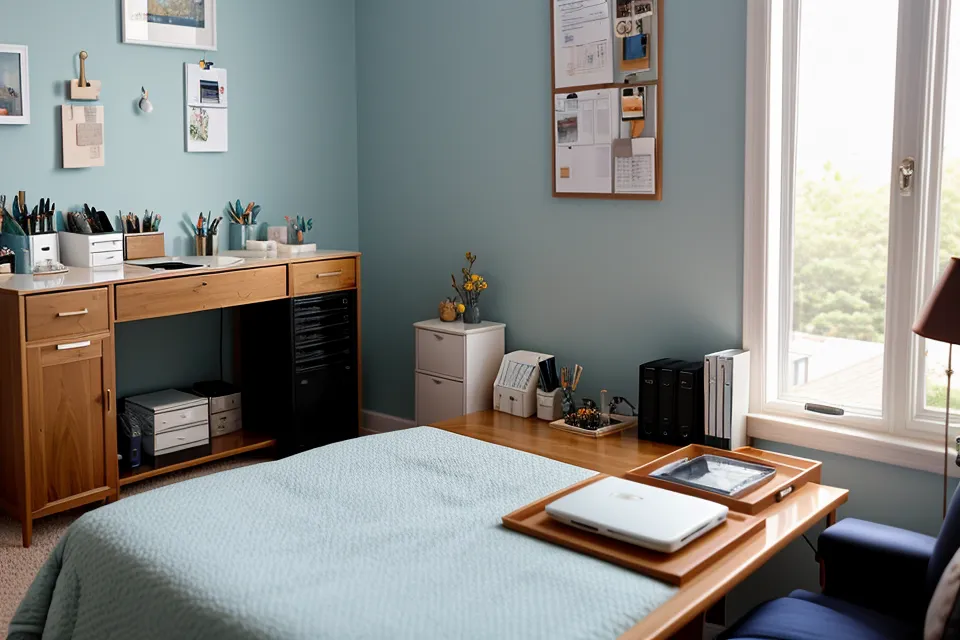
Some of it is environment, too, not supplements, just the room itself. My bedroom in the Inner Richmond has blackout curtains I bought during an unhinged 2 a.m. online shopping spree, a mattress pad that stays cool no matter what the fog is doing outside, and a standing desk in the corner where the laptop still opens some nights past 10 p.m. There's a journal on the nightstand next to a glass of water and a phone I've actually trained myself to leave face-down, most nights anyway. None of that fixes a craving by itself, but it removes one more excuse for lying there scrolling once the craving part is actually handled.
Mental Clarity Beats the Number on the Scale
I'm a marketing director. I default to measuring things, so of course I tracked this like a campaign. But the number that mattered most wasn't a weight or a dollar amount saved on late-night delivery orders: it was executive function, plain and simple. On the nights I actually get deep sleep, I think faster the next day. I can absorb a crisis update from the Singapore office without snapping at anyone or needing three espressos before a 9 a.m. stand-up. Rowan, a former colleague who found this blog by accident and messaged me like he'd caught me in the act, has started doing the same thing; he'll casually mention his sleep numbers in a normal work conversation the way other people mention the weather, completely unaware of how strange that sounds to the rest of us. I used to think that kind of talk was excessive. Now I sort of understand it.
Why I Switched Off Melatonin
Here's an honest one: melatonin never worked well for me. It got me to sleep, technically, but I'd wake up feeling like my head was stuffed with cotton, which is its own kind of unproductive. Switching to SleepLean for better rest solved that particular problem, mostly because it wasn't trying to sedate me into submission; it was working with whatever my body was already trying to do at night instead of overriding it. I paired that with YU SLEEP on nights when the wired feeling was especially stubborn, usually after a call that ran long or a decision that needed to happen faster than I was comfortable with. It's not a cure for a bad day. It just stops the bad day from following me into the next one.
Building a Stack That Survives a Deadline Week
A routine that only works on a calm Tuesday isn't a routine, it's a hobby. The stack I actually use has to survive a launch week, a client escalation, a flight to a client site. Otherwise what's the point? That means fewer moving pieces, not more. I'm not chasing every possible variable every night; I'm handling the two that mattered most for me, the craving piece and the wired-but-exhausted piece, and letting the rest of my life stay as messy as it already is. That includes something as basic as paying attention to when my last coffee actually happens, which is its own conversation for another day. These days, if the 4 p.m. slump hits, I'd rather be two blocks away at The Mill on Divisadero with a coffee and my laptop than standing in front of an open fridge deciding nothing in it is what I actually want. If you're managing a team across three time zones, or you haven't had a fully boring, uneventful week in longer than you can remember, your solution needs to be built for that reality, not for someone with a 9-to-5 and a fixed bedtime.
Where Would I Start If I Were You?
Start with whichever piece is loudest in your own life right now. If it's the kitchen-at-midnight problem, look at what's actually driving the craving instead of just white-knuckling past it. If it's the wired-awake problem, look at what's happening to your stress response before you ever get near the pillow. For me, YU SLEEP has been the most consistent piece of the kit for actually staying asleep once I finally get there, and that consistency is worth more to me than almost anything else I've tried. You don't need to fix all of it this week. You need one thing that survives your actual schedule, not the fantasy version of it where you go to bed at 10 p.m. and nothing pings after 6.