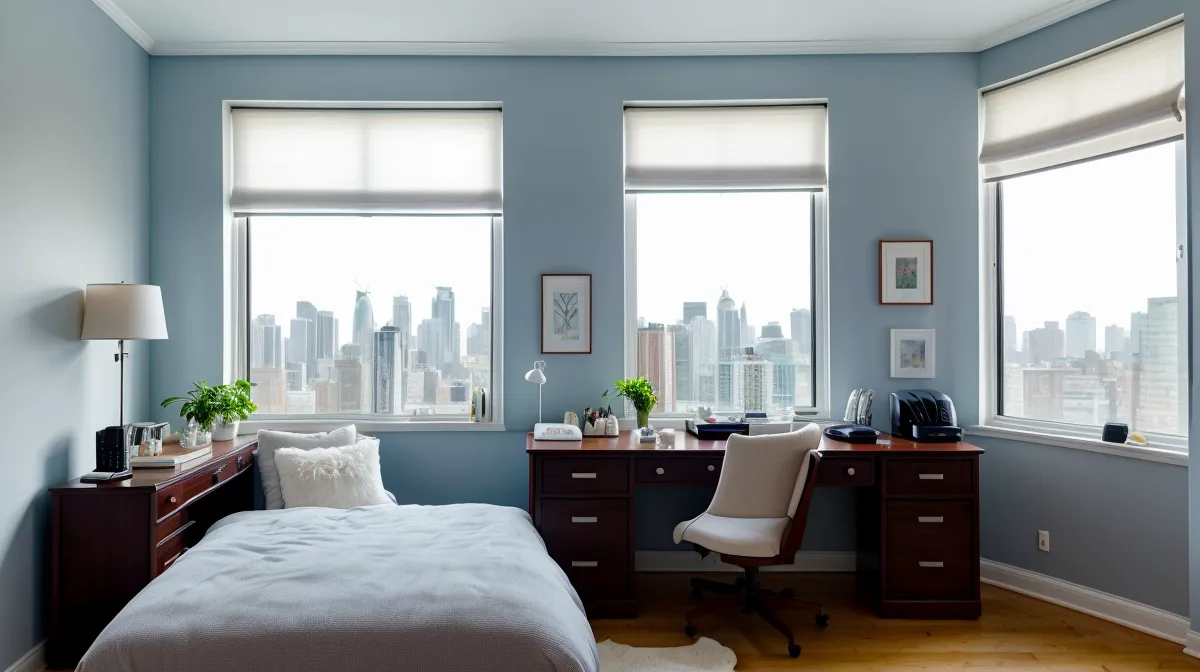
Replying to the same three-line Slack message for the third time because real sentences kept refusing to form, I finally admitted the problem wasn't the message. It was four hours of broken, light-interrupted sleep sitting behind it. Nothing about my setup fit my actual life — a flexible-sounding schedule that somehow still meant 50-hour weeks, packed into a bright San Francisco apartment where every streetlight and digital billboard treated my bedroom window like a stage. Closing that gap turned into a real exercise in sleep optimization, less about perfect routines and more about finding sleep gear that could survive urban living and an inbox that never fully closes. Busy professionals don't get a dark, quiet, climate-controlled sleep lab. We get whatever bedroom the lease came with.
Quick disclosure before we get into the details: a few links below are affiliate links, including the nighttime supplement I'll mention later. If you click through and buy something, I earn a small commission at no extra cost to you, and I only recommend gear and routines I've actually used while living through genuinely demanding work weeks.
Blocking Out a Billboard-Lit Bedroom Starts With the Right Mask
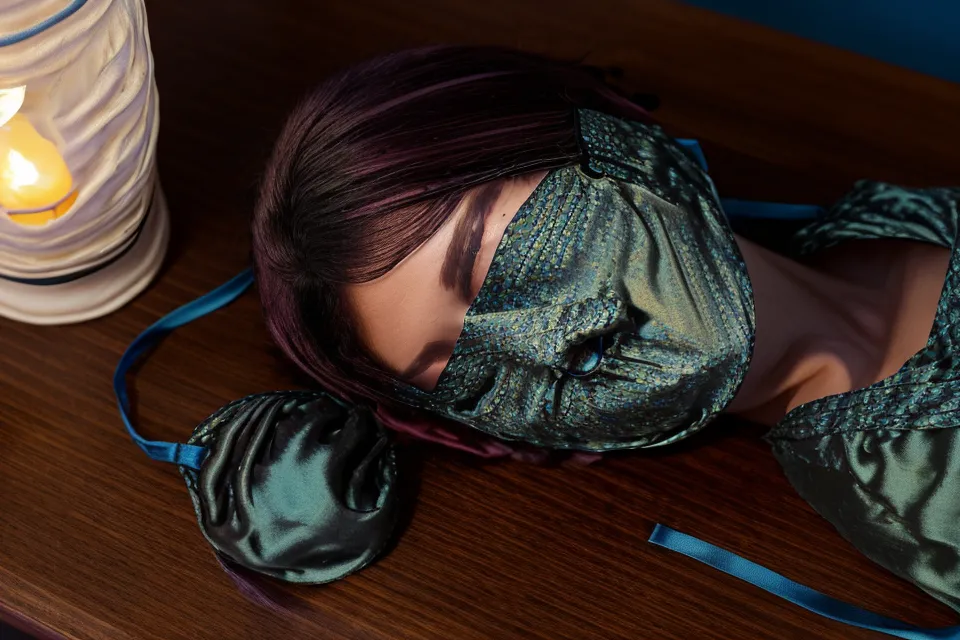
A single meeting where my eyelids simply stopped cooperating — mid-slide, in front of a client — was the moment sleep deprivation stopped feeling like a professional flex and started feeling like a liability. Afterward I audited everything about my bedroom, and the biggest offender turned out to be the window. Renters can't exactly drill blackout tracks into a building they don't own, and municipal street lighting plus commercial signage leaked in no matter how I angled the blinds. Even a sliver of light is apparently enough to convince your body it isn't quite nighttime yet, eyelids closed or not. What actually closed that gap was a mask — specifically one made from real silk, since the cheap polyester version I tried first felt like a scratchy heating pad strapped to my forehead by hour two.
The Fabric Numbers That Actually Matter
Silk sold as sleep gear isn't one uniform material, and the two numbers worth checking before you buy are the grade and the weight. Grade 6A refers to the quality of the raw mulberry silk fiber — long strands, minimal snagging, the softest option against skin that's spent ten hours facing a monitor. Weight gets measured in momme, and anything between 19 and 25 momme tends to hit the right balance: lighter weaves let too much light bleed through, heavier ones trap heat and can wake you up again a few hours in. My own mask landed at 22 momme, which turned out to be dense enough for near-total blackout against a streetlamp-lit window but breathable enough that I wasn't peeling it off at 3 a.m. feeling overheated.
Getting the darkness right solves half the morning problem too, since waking up still groggy inside a pitch-black mask is its own special kind of disorienting. Pairing a well-fitted mask with something like The Best Sunrise Alarm Clocks for Waking Up Without Early Fatigue smoothed out that transition for me considerably, though getting to sleep in the first place turned out to be its own separate project.
Fixed Band or Adjustable Strap: What Works for a Work Week
Strap design is the detail most buying guides skip, and it's the one that decides whether a mask actually gets worn past week one. Fixed bands go on fast — pull it over your head, done, no fumbling with sliders while you're half-conscious after a day that ran long. Adjustable straps take longer to dial in on night one, maybe thirty seconds of fiddling, but they don't dig into your temples the way a stretched-out fixed band eventually does, and they hold their fit through different hairstyles or whichever side you end up sleeping on.
I mentioned this exact debate to a friend of mine who spends her weekends wrist-deep in clay at a pottery studio in Dogpatch, and she made the same call about her apron straps — the ones that don't bite into her shoulders after hours at the wheel are the ones she actually reaches for every time. Comfort you don't notice is the whole point. For anyone wearing a mask nightly instead of occasionally, the extra thirty seconds of adjusting pays for itself within the first week.
Total Darkness Still Couldn't Switch My Brain Off
Here's the part that surprised me: once the light problem was solved, I was lying in genuinely total darkness, mask doing its job perfectly, heart still thudding away while my brain ran laps around next quarter's deliverables. Blocking light handles the outside half of the equation. It does nothing for an overstimulated nervous system that hasn't gotten the memo that the day is over. Quick note, because this matters: I'm not a doctor or a sleep coach, just a tired director sharing what moved the needle for me — talk to an actual professional before changing anything that affects your health.
Before I landed on anything that actually helped with that second half, I'd signed myself up for a four-day evening-reset course that promised to undo years of bad habits in a single long weekend. I made it through the first two modules, fully intending to finish, and then a launch week ate the rest of my evenings and I never opened module three. Around the same stretch I also started taking fifteen-minute laps around Salesforce Park's rooftop most lunches, mostly just to get actual daylight on my face and out of the building — that part stuck, even after the course didn't.
What finally helped was treating the internal side the same way I treat the external side — as its own separate problem. That search led me to YU SLEEP, which leans on calming the nervous system without the grogginess a lot of synthetic options leave behind the next morning. Within a short stretch of consistent use alongside the mask, the shift was obvious: shoulders actually dropped, breathing slowed down on its own, and falling asleep stopped feeling like climbing a hill. If daytime brain fog from bad nights is the bigger issue for you right now rather than the falling-asleep part, I got into that more in Using ChronoBoost Pro for Cognitive Function and Sleep Deprivation.
Weighing the Three Nighttime Supplements Side by Side
Three options ended up on my shortlist, and each one solves a slightly different version of the problem. YU SLEEP stayed my go-to because it's built around gentle, non-habit-forming ingredients aimed at deeper sleep phases rather than just knocking you out, and the 60-day money-back guarantee made YU SLEEP an easy thing to try during a stretch of high-stakes launches — it took about ten days of consistent use before the full benefit showed up, but the difference in morning alertness compared to melatonin gummies wasn't subtle.
SleepLean makes sense if your actual movement during the day has quietly disappeared into back-to-back desk hours, since it pairs sleep support with a nighttime metabolic angle — useful if evening stress eating or a sluggish daytime metabolism is part of your specific picture, though that second half of the formula won't matter to everyone reading this. SleepLean leans more niche for that reason. ChronoBoost Pro, on the other hand, is built as a three-in-one bridge covering nighttime recovery, mental clarity, and daytime energy, stimulant-free and without artificial filler, backed by its own 60-day guarantee that starts counting from the day your order actually arrives.
If the only goal is better sleep, full stop, YU SLEEP is the simplest pick. If a sluggish metabolism is genuinely part of the problem, SleepLean's extra angle might be worth the trade-off. And if days feel just as foggy as nights, ChronoBoost Pro's broader coverage is the more sensible bridge.
Sleep Competitors Beyond Light: Other Factors That Matter
A mask is one piece of a bigger bedroom setup, not the whole system, so it's worth naming what else is actually competing for a slice of the night.
Morning light exposure does as much signaling work as night-time darkness does, and so does keeping roughly the same wake time even when the week goes sideways — your body clock cares more about consistency than almost anything else. Then there's whether your bedroom reliably tells your brain "this means sleep," the way a hotel room never quite manages on the first night away. A mask won't undo a too-late coffee still sitting in your system long after you've stopped feeling it, and it definitely won't turn wine-induced drowsiness into real rest — those are different states entirely, same as the gap between a stress-flooded evening and one where your body has genuinely downshifted, which shows up more clearly in a wearable's recovery numbers than in how you actually feel in the moment.
Carrying real sleep debt from a rough stretch doesn't get erased by one good dark night, and the deeper stages your brain cycles through matter more than however many hours a tracker logs — assuming you're not the type who starts losing sleep over the data itself. A short nap done right skips that thick-headed slog back into the world, and even lying still on purpose without actually sleeping can give your system something close to rest when real sleep isn't on offer.
The hour before bed does its own share of the work: whether a laptop is still glowing somewhere nearby, whether dinner landed too close to lights-out, whether your shoulders ever got the message to unclench, whether tomorrow's to-do list got parked somewhere other than your head. Some nights a brain just won't drop out of a weirdly alert state no matter how tired the body underneath it is, and the dread that shows up the second you start anticipating tomorrow's calendar does its own damage before your eyes are even closed. None of that gets fixed by fabric — and neither does whether you're breathing through your nose instead of your mouth, whether a steady layer of noise is doing work your mask can't, or whether your mattress is keeping you cool enough to stay asleep once you're actually under.
The Sleep Gear Actually Worth Keeping on a Busy Professional's Nightstand
None of this fixed everything overnight, and some weeks still get away from me completely — there was a Tuesday not long ago when I walked into our team's all-hands and realized halfway through that I hadn't touched my coffee yet. It genuinely hadn't crossed my mind, which is a strange thing to notice about yourself when coffee's usually the first thing you reach for. The sheets were still cool on the side of the bed I hadn't rolled onto yet when my alarm went off that morning, which tells you something about how the night actually went.
If a city apartment feels permanently lit up by billboards, headlights, or some neighbor's porch light that never turns off, the fix starts with real sleep gear — a Grade 6A, 22-momme mulberry silk mask with a strap you can actually adjust, not whatever came free with a travel pillow. Pair that with something to settle the inside of your head too, and YU SLEEP is still the one I'd point a fellow busy professional toward first. Darkness handles the room. The rest is on you, your schedule, and whatever's sitting in your inbox at midnight — but at least you'll be facing it with actual sleep behind you instead of four broken hours and a mask that never fit right in the first place.
| Product | Rating | |
|---|---|---|
| YU SLEEP Top Pick | 9.2 | Read More → |
| SleepLean | 8.5 | Read More → |
| ChronoBoost Pro | 8.0 | Read More → |
YU SLEEP
Pros
- + Noticeable improvement in sleep depth within the first week
- + Gentle botanical formula without next-day grogginess
- + Zero melatonin dependency or weird morning brain fog
- + Backed by a 60-day money-back guarantee
Cons
- ▹ Only available directly through their official site
- ▹ Took about ten days of consistent nightly use to feel full cumulative effects