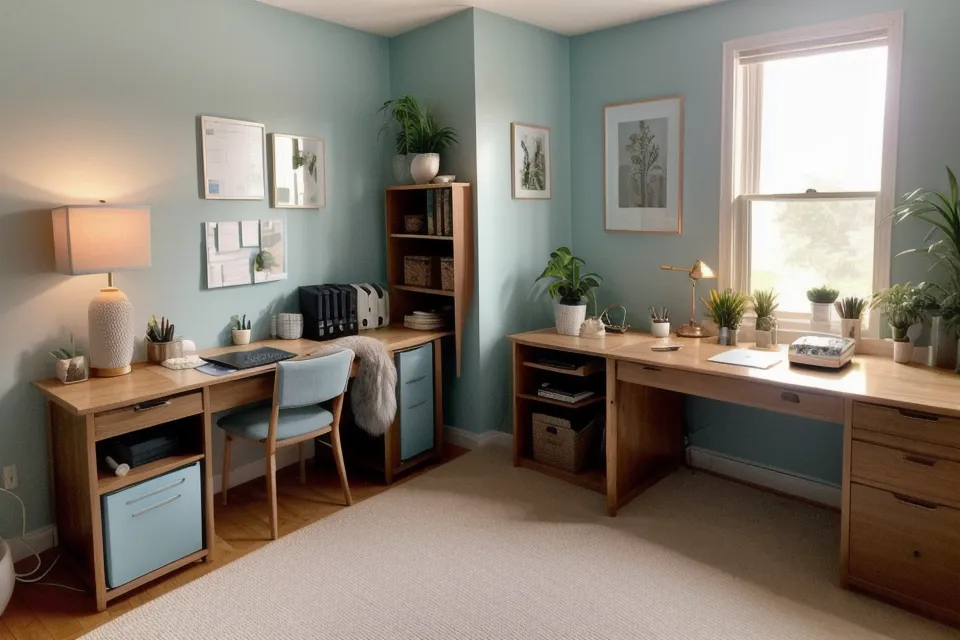
A sealed bedroom can climb past 2,500 parts per million of carbon dioxide by the time an alarm goes off — high enough to leave a person foggy before the first Slack notification of the day. That number sat with me longer than it should have. It explained a specific, heavy tightness I kept waking up with, the kind that made the air quality in my own sleep environment feel like something to actually fix instead of something to just tolerate. Indoor plants get pitched as this cute, Instagram-friendly productivity hack — a little greenery, a little serotonin, problem solved. Most of that advice is wrong, or at least badly incomplete, and figuring out why cost me one dead Fiddle Leaf Fig and a very confused cat.
Here's the thing — I'm not a botanist, and I never set out to become the office plant lady. I'm a marketing director who once dozed off mid client-presentation, which is its own particular flavor of humiliating, and only started paying attention to sleep after that happened. Nothing here is medical advice. It's just what actually held up once I stopped trusting the ranked listicles.
The Plant Myth Everyone Repeats
The myth goes like this: grab whatever's sitting on a "top 10 air-purifying plants" list, put it on any free surface, and your bedroom air sorts itself out. It doesn't work that way. Most plants photosynthesize the way you'd expect during daylight and then flip the process at night, releasing carbon dioxide instead of pulling it in. They're like teammates who only check messages nine to five — present all day, gone right when your bedroom actually needs them.
That nighttime flip is a big part of why the CO2 level in a closed room climbs overnight in the first place, and why I'd already ruled out one obvious fix before plants even entered the picture. I use a humidifier for those dry San Francisco winters, so bolting on a second gadget that hums and blinks felt like the wrong direction. Plants seemed quieter. Literally.
NASA's NASA Clean Air Study gets cited constantly, and almost always out of context. It's decades old, it tested a sealed lab chamber, and it is not proof that three succulents will fix a two-hundred-square-foot bedroom on their own. What it does offer is a rough ratio worth borrowing — about one plant per 100 square feet if you want the effect to be more than decorative. My bedroom isn't a ballroom, so three or four in the right spots was the honest target, not ten.
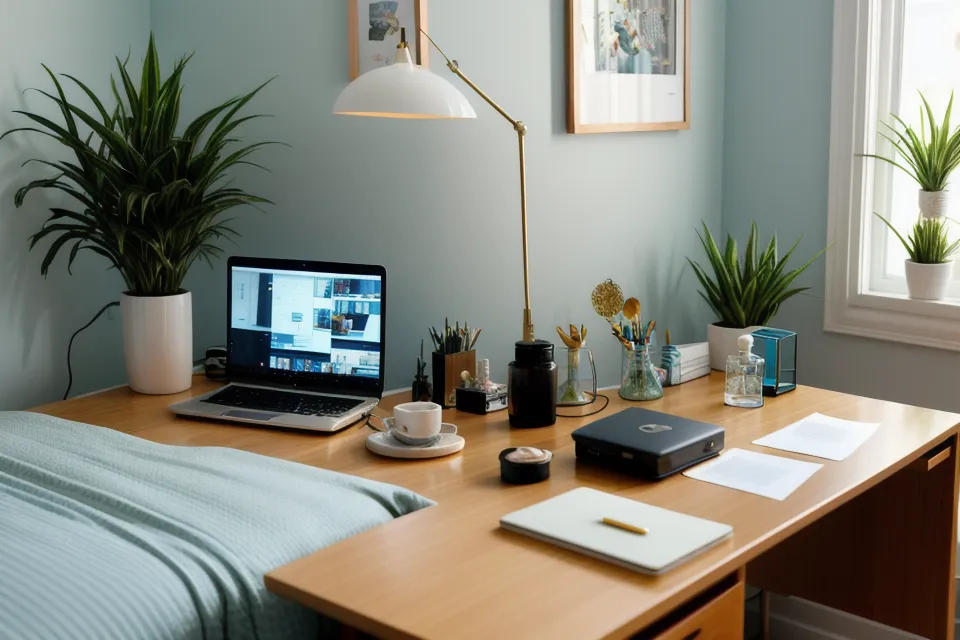
Most Indoor Plants Do Nothing for Your Air Quality
The plants actually worth having near a bed are the ones botanists call CAM plants. They keep their pores shut during the day to save water, then open them at night, pulling in carbon dioxide and letting oxygen out while everyone in the room is asleep. A Snake Plant does this. So does Aloe Vera. So do most succulents, which is probably why airport lounges are full of them and nobody ever questions it.
Somewhere in there — after rearranging a few plants, after actually respecting the one-per-hundred-square-feet math instead of eyeballing it — I sat through a four-hour strategy offsite and never once hit that familiar two o'clock wall. No fog behind the eyes. No fighting to keep them open through the budget slide. Just present, the entire time, which isn't something I'd said about myself in a work meeting in longer than I want to admit.
What My Dying Fiddle Leaf Fig Actually Taught Me
Confidence is a dangerous thing once a hobby starts working. I bought a Fiddle Leaf Fig next, the kind that shows up in every aspirational home-office photo, and it wanted precise light, specific humidity, and a misting schedule I could not realistically keep. A launch week hit — fourteen-hour days, caffeine standing in for actual rest — and I forgot the thing existed. Every leaf dropped inside two weeks.
That wasn't the only system I'd lost to a launch. Before any of this, I gave myself a strict thirty-day rule: no screens after nine at night. It lasted five days. Then a product launch needed war-room texts past midnight, and the rule died quietly, no formal announcement. Plant and screen rule taught the same lesson — anything that demands more attention than it saves during a bad week isn't a system. It's just one more thing to feel guilty about abandoning.
Bedroom Plant Safety for Your Pet
Nobody puts this on the listicles, but a good number of the classic air-purifying picks are toxic if chewed — the Snake Plant included, along with Peace Lilies. I found this out because a friend watched my cat eye a new Sansevieria like a snack and said something before I had to learn it the expensive way at an emergency vet.
Spider Plants and Areca Palms are the safer swap — non-toxic, and still reasonably effective at filtering the formaldehyde and benzene that off-gas from furniture and rugs. Anything borderline went into a hanging planter, out of paw's reach, which solved the problem without giving up the plant entirely.
Clean Air Won't Quiet a Loud Inbox
Better air quality is not the same thing as a quiet mind. Clean air alone never once stopped me from replaying a missed deadline at two in the morning. The plants fixed the room. They didn't fix the reason I kept checking email in it. That gap is where YU SLEEP came in for me — it took about ten days before I noticed a real difference, and it helps most during the weeks I'm also fighting the Sunday Scaries on top of everything else.
My former colleague Rowan Ng, who tracked this blog down and still half can't believe I'm the one writing it, runs a control week before he tests anything new — no changes, just a baseline. It's a habit worth stealing. It's the only real way to know whether a plant, a supplement, or a new pillow actually did something, instead of you just happening to sleep well because Friday finally showed up.
Which Plant Should You Actually Buy
Skip the ranked lists and check three things instead. Does it run on CAM photosynthesis, so it's actually working while you sleep instead of against you — Snake Plant, Aloe Vera, and most succulents qualify, while ferns and the leafier decorative picks generally don't. Is it safe around anything in your home with paws or curious hands. And can it survive being ignored for two straight weeks during a launch, because that week is coming whether the plant is ready or not. Fail any one of those three, and what you've bought is decor, not infrastructure.
My bedroom still has the blackout curtains from a 2 a.m. Amazon spiral, a standing desk in the corner where my laptop guilts its way open some nights anyway, and a notebook on the nightstand next to a glass of water and a phone I try to leave face-down. Damien Ulrich, a friend who works in commercial real estate finance and keeps hours as bad as mine, sent me a sleep article link close to midnight not long ago — of course he did. I read it the next morning at The Mill on Divisadero, coffee gone cold, half annoyed he was right about something again. The plants sit near that window, which does double duty catching morning light, since waking up on schedule depends on that almost as much as anything happening the night before. A temperature-controlled pad on the bed does more heavy lifting than people expect, too — a room that runs warm cancels out whatever the plants are managing. They're one layer in a bigger stack, not the whole fix. A salt lamp turned down until it's barely a smear of amber in the corner does more for the mood of the room than any single leaf ever will.
None of this makes my bedroom a botanical garden. A couple of the plants are thriving, one is visibly sulking, and that's fine — progress over perfection, according to my therapist. If you want to start somewhere, one Snake Plant and an honest look at whether your bedroom's air is the actual problem, or just one symptom of it, beats another supplement order. And if the air gets better but your brain still won't quit at midnight, that's a different problem — YU SLEEP addresses the second half, not the first, and it's worth knowing the difference before spending money on either one. Talk to an actual doctor if insomnia feels like more than a rough stretch. The rest of us are just trying to get through the corporate grind with our lung capacity intact.